Researchers demonstrate acoustic levitation of a large sphere0
- From Around the Web, Science & Technology
- August 16, 2016
Scientists have discovered how to levitate small objects with an acoustic field, sound waves able to defy gravity.

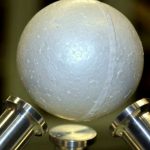
Scientists have discovered how to levitate small objects with an acoustic field, sound waves able to defy gravity.

The team reported measurements of non-conventional thrust produced by a device that uses the effects of microwaves passing through a uniquely structured waveguide. Thrust with no propellant!

Lawrence Livermore National Laboratory (LLNL) scientists have combined biology and 3D printing to create the first reactor that can continuously produce methanol from methane at room temperature and pressure.

Researchers have developed a method for achieving an order-of-magnitude enhancement of the light emission from a class of two-dimensional (2D) materials called transition metal dichalcogenides (TMDs).

China is planning to build an enormous particle accelerator twice the size and seven times as powerful as CERN’s Large Hadron Collider, according to state media reports.

Delicate space nets. Probes landing with the force of a bomb. Ice-burrowing tunnellers. These are a few of the robots poised to grab the baton from NASA’s Cassini orbiter in the search for alien life on Saturn’s icy moon Enceladus.

Time as we measure it and know it, doesn’t really exist.

Gene editing, brain implants, and synthetic blood transfusions all raise concerns in a new poll

Society’s increasing reliance on the internet, computers and mobile phones puts stringent demands on technological developments. Shrinking the electronic components – in other words, increasing the number of transistors on a single chip – is not an easy task as current components are already reaching atom-like sizes.

A team of researchers from several institutions in Hungary has conducted experiments meant to test the possibility that the Vikings actually did use sunstones to navigate.