Origami-Inspired Untethered Machines Might Be the Future of Soft Robotics0
- From Around the Web, Science & Technology
- August 24, 2019
Soft robots have traditionally had to rely on a power source. A Caltech team has created a solution.

Soft robots have traditionally had to rely on a power source. A Caltech team has created a solution.
The SuperCam’s laser systems will be used to study Mars’ geologic past.

A study published in JAMA Pediatrics has given new life to a long-running debate: whether adding fluoride to drinking water is a prudent way to prevent tooth decay, or a potentially toxic mistake.

The molecule called cyclocarbon joins other carbon forms, like buckyballs and carbon nanotubes

Certain nerve cells sync their firing just before a recollection resurfaces

Supersolids, solid materials with superfluid properties (i.e., in which a substance can flow with zero viscosity), have recently become the focus of numerous physics studies. Supersolids are paradoxical phases of matter in which two distinct and somewhat antithetical orders coexist, resulting in a material being both crystal and superfluid.

The new state could increase storage space and speed up quantum computing.
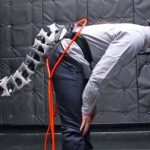
Millions of years after the ancestors of humans evolved to lose their tails, a research team at Japan’s Keio University have built a robotic one they say could help unsteady elderly people keep their balance.

Octopus-like Schwann cells that engulf nerves in skin can sense pain, experiments show

Dark matter, which researchers believe make up about 80% of the universe’s mass, is one of the most elusive mysteries in modern physics. What exactly it is and how it came to be is a mystery, but a new Johns Hopkins University study now suggests that dark matter may have existed before the Big Bang.