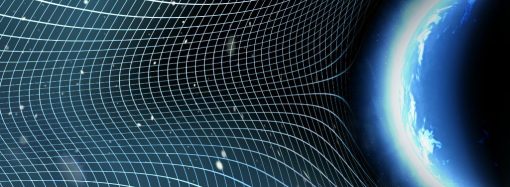
Forbidden planets: Understanding alien worlds once thought impossible0
- From Around the Web, Space
- December 6, 2019
When astronomers discovered the first exoplanet around a normal star 2 decades ago, there was joy—and bewilderment.

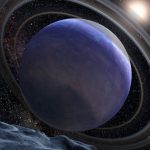
When astronomers discovered the first exoplanet around a normal star 2 decades ago, there was joy—and bewilderment.
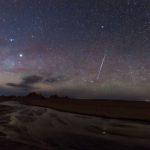
Stars and comets make unlikely dance partners. Their gravitational partnership is one that astronomers have long suspected but have never seen — until now. For the first time, a Polish group has identified two nearby stars that seem to have plucked up their icy partners, swinging them into orbits around our sun.
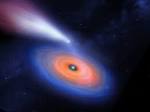
The exotic system provides a preview of our own solar system’s fate.
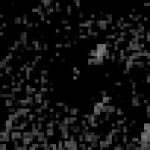
Using data from NASA’s Transiting Exoplanet Survey Satellite (TESS), astronomers at the University of Maryland (UMD), in College Park, Maryland, have captured a clear start-to-finish image sequence of an explosive emission of dust, ice and gases during the close approach of comet 46P/Wirtanen in late 2018. This is the most complete and detailed observation to date of the formation and dissipation of a naturally-occurring comet outburst. The team members reported their results in the November 22 issue of The Astrophysical Journal Letters.
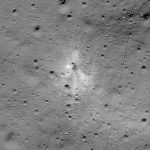
India’s Vikram lunar lander, which crashed on its final approach to the Moon’s surface in September, has been found thanks in part to the sleuthing efforts of an amateur space enthusiast.

An astronaut was able to control a rock-sampling rover, all the way from the International Space Station.

A few months back, a top NASA scientist had suggested that alien discovery will be made within 2021
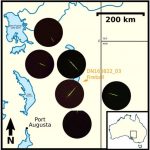
A team of researchers at Curtin University studying data from Australia’s Desert Fireball Network has identified a minimoon fireball. In their paper published in The Astronomical Journal, the group describes how they found the fireball and the methods they used to show that it had come from a minimoon.

At a two-day ministerial meeting held in Seville, Spain this week, the European Space Agency’s member states approved the most ambitious plan to date by agreeing to provide nearly 12.5 billion euros ($13.8 billion) for the next three years to boost the future of ESA and the whole European space sector. This is the agency’s biggest increase in funds in the last 25 years.
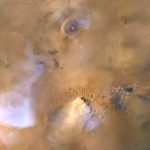
NASA’s Mars Reconnaissance Orbiter observed a high number of ‘dust towers’ — concentrated clouds of dust that warm in sunlight and rise high into the air — during the global Martian dust storm in 2018.