Terrawatch: the mysteries of the moon’s largest crater0
- From Around the Web, Space
- October 2, 2019
A recent Chinese mission has revealed more about the South Pole Aitken basin

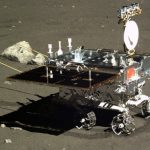
A recent Chinese mission has revealed more about the South Pole Aitken basin
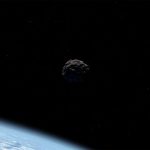
When it comes to mining space for water, the best target may not be the moon: Entrepreneurs’ richest options are likely to be asteroids that are larger and closer to Earth.
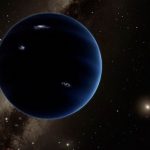
New research argues Planet Nine is really just a black hole left over from the Big Bang.
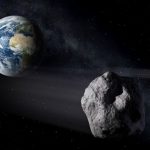
Although Earth only has one moon, it does have other natural satellites, including asteroid 2016 HO3, known as a “co-orbital object.” These tiny celestial objects could be an “attractive location for extraterrestrial intelligence,” according to a new study.

In the last few months, teams of SpaceX engineers working on the flat coastal plains of South Texas and in a nondescript industrial yard on Florida’s Space Coast have been building two futuristic-looking stainless steel rockets — or Starships — prototypes for a reusable vehicle the company claims could one day ferry people to Mars.

There is an as-yet-unseen population of Jupiter-like planets orbiting nearby Sun-like stars, awaiting discovery by future missions like NASA’s WFIRST space telescope, according to new models of gas giant planet formation by Carnegie’s Alan Boss, described in an upcoming publication in The Astrophysical Journal. His models are supported by a new Science paper on the surprising discovery of a gas giant planet orbiting a low-mass star.
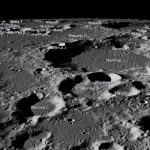
You’d think spotting a crashed lander on the surface of the Moon would be easier, but NASA is discovering that the hunt can be trickier than you might expect. Searches for India’s Chandrayaan-2 lander, Vikram, have turned up empty-handed so far, with the failed mission so far escaping the high-resolution eye of NASA’s lunar satellites.

When galaxies collide, so do the supermassive black holes at the center of each galaxy. For the first time, astronomers have observed a triple collision of galaxies, which have sent their black holes on a collision course, according to a new study.

Could northern summer 2019 go down in history as “the summer without sunspots”?
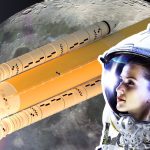
NASA announced its returned mission to the moon by 2024, titled Artemis it will cost an estimated $20-$30 billion.