Inspiration4: Who are the four civilians joining SpaceX’s pioneering trip to orbit?0
- From Around the Web, Space
- September 14, 2021
Jared Isaacman, Hayley Arceneaux, Christopher Sembroski and Sian Proctor are to be launched into orbit


Jared Isaacman, Hayley Arceneaux, Christopher Sembroski and Sian Proctor are to be launched into orbit
The catch: We have to wait until about 2037 for an answer
Researchers have found that black holes may exert pressure on their surroundings. The discovery made by a team of astronomers in the U.K. builds on a theory posited by Stephen Hawking in 1974, which suggests black holes give off thermal radiation.
Astronomers have discovered that dying white dwarf stars can burn nuclear fuel in their outer shells, prolonging their lives. The discovery made using the Hubble Space Telescope runs contrary to the current view of white dwarfs as just slowly cooling inert star cores.

2021 PJ1, a near-Earth asteroid between 20 and 30 m (66-98 feet) across, safely flew past Earth on August 14, 2021 at a distance of over 1.7 million km (1 million miles). The approach was historic, marking the 1,000th near-Earth asteroid to be observed by NASA’s planetary radar in just over 50 years.
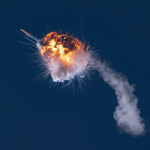
The rocket nailed its liftoff, but started cartwheeling mid-air before perishing in an explosive fireball
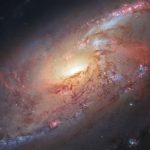
Prof Paul Davies suggests viruses may form vital part of ecosystems on other planets
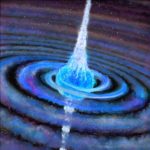
When a dead star plunges into an active star, expect an explosion of astronomical proportions that isn’t supposed to happen yet.Astronomers were able to work out this stellar puzzle after tracing an unusual burst of bright radio waves in 2017.

The initial images captured by the Mastcam-Z instrument onboard NASA’s Perseverance rover show an intact Mars sample present in a sample tube after coring.

Some planets in the habitable zone are not good for life, but others outside it might be