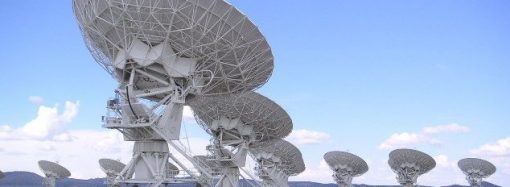
What a dying star’s ashes tell us about the birth of our solar system0
- From Around the Web, Space
- April 30, 2019
A grain of dust forged in the death throes of a long-gone star was discovered by a team of researchers led by the University of Arizona.

A grain of dust forged in the death throes of a long-gone star was discovered by a team of researchers led by the University of Arizona.

‘Tabletop exercise’ will ensure US government is ready to respond to any real asteroids that could be on their way to destroy us
New measurements from NASA’s Hubble Space Telescope confirm that the Universe is expanding about 9% faster than expected based on its trajectory seen shortly after the big bang, astronomers say.
The tenuous nitrogen atmosphere of the dwarf planet Pluto is predicted to ultimately collapse and freeze over.

But we need to change the law first

Ten years ago, NASA reported a “perfect storm of cosmic rays.” During the year 2009, radiation peppering Earth from deep space reached a 50-year high, registering levels never before seen during the Space Age.
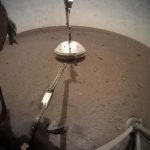
Here’s what a rumbling Red Planet sounds like
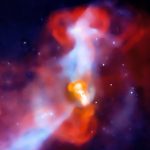
Its diameter suggests the black hole is 6.5 billion times the mass of the sun

President Donald Trump recently called for a “Space Force” to defend the United States’ extraterrestrial operations. Russia, China, and India have also beefed up their military capabilities in space. Are we headed for a cosmic conflict?
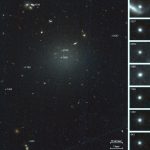
In 2018, a team of astronomers from the United States and Canada discovered that an ultra-diffuse galaxy called NGC 1052-DF2 (DF2 for short) contains virtually no dark matter. The galaxy is roughly the size of our Milky Way Galaxy, but hosts only 1/200 the number of stars. It lies in the constellation of Cetus, about 65 million light-years away, and is a member of the NGC 1052 group of galaxies. Now, the team reports the discovery of a second galaxy in this class, residing in the same group.