Ultima Thule may be a frankenworld0
- From Around the Web, Space
- March 27, 2019
Astronomers are closer to uncovering the distant space rock’s origin story

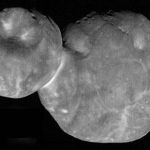
Astronomers are closer to uncovering the distant space rock’s origin story
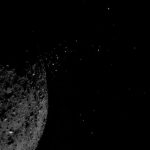
A shock discovery is in from Bennu. The NASA spacecraft analysing the asteroid has observed it shooting out plumes of dust that surround it in a dusty haze – a phenomenon we’ve never seen in an asteroid before.
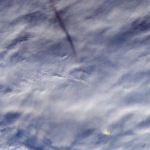
A meteor that snuck by the world’s telescopes and exploded over the Bering Sea was caught on camera after all.

NASA astronauts Nick Hague, pictured top, and Anne McClain spent more than six and a half hours outside the International Space Station on March 22, 2019.
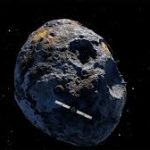
Scientists who study the solar system tend to ask big questions: How was our solar system formed? Where did the building blocks of life come from? What hazards from above threaten life on our planet? To find answers, they’re looking more and more at small worlds.
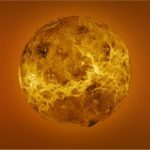
The longstanding idea that Venus is geologically dead is a “myth”, scientists say.

Using radar data collected by NASA’s Mars Reconnaissance Orbiter, a Southwest Research Institute-led team found evidence of an ice age recorded in the polar deposits of Mars. Ice ages on Mars are driven by processes similar to those responsible for ice ages on Earth, that is, long-term cyclical changes in the planet’s orbit and tilt, which affect the amount of solar radiation it receives at each latitude.
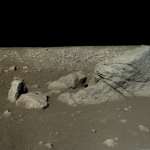
China has released hundreds of images of the moon, taken by its Chang’e 3 lander and its companion rover, Yutu. It’s been 50 years since the first lunar photos were taken by astronauts on NASA’s Apollo 11 mission. China is the third nation to land on the Moon, with the USA and the USSR preceding them.
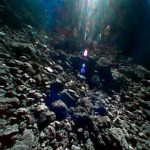
This Sept. 23, 2018 image captured by Rover-1B, and provided by the Japan Aerospace Exploration Agency (JAXA) shows the surface of asteroid Ryugu.
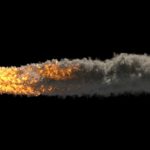
A huge fireball exploded in the Earth’s atmosphere in December, according to Nasa.