3 explanations for ‘Oumuamua that aren’t alien spaceships0
- From Around the Web, Space
- March 2, 2019
Possibilities for the interstellar object include a fluffy fractal and a comet skeleton

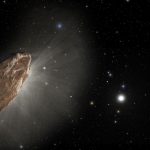
Possibilities for the interstellar object include a fluffy fractal and a comet skeleton
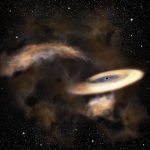
Astronomers have detected a stealthy black hole from its effects on an interstellar gas cloud. This intermediate mass black hole is one of over 100 million quiet black holes expected to be lurking in our Galaxy. These results provide a new method to search for other hidden black holes and help us understand the growth and evolution of black holes.

The NETS meeting is wrapping up today at the Pacific Northwest National Laboratory in Richland, Washington.

The first human colonists on Mars will have to forgo many of the creature comforts of Earth — things like enjoying an ozone layer, for example, or opting out of rearing genetically engineered Martian babies. Fortunately, one essential earthly amenity these hardscrabble colonists may not have to give up is wine.
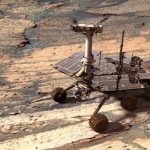
We’re all still mourning NASA’s Opportunity rover, which the agency officially declared dead earlier this month following several months of radio silence in the wake of a heavy Martian dust storm that left Opportunity’s solar panels covered with a thick layer of red dust. But if it’s any consolation, the intrepid little rover has a fitting memorial out in the asteroid belt.
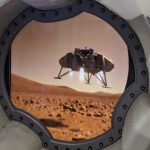
A pair of Hewlett Packard Enterprise servers sent up to the International Space Station in August 2017 as an experiment have still not come back to Earth, three months after their intended return.
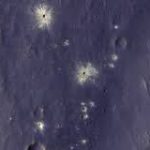
Sometime in the last decade, something heavy slammed into the Martian atmosphere and shattered into a hard rain of superheated material. Those pieces fell to the Red Planet’s surface, dotting the Martian dirt with a pattern of pockmarks.
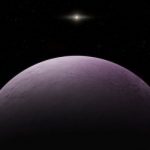
Mystery shrouds ‘very faint’ planetary body that appears to be 140 times further from the sun than Earth
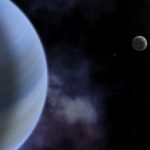
Astronomers using data from NASA’s Transiting Exoplanet Survey Satellite (TESS) have discovered two ‘warm’ gas giants orbiting a nearby dwarf star.
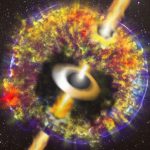
An emerging consensus suggests the crash can explain distant gamma-ray bursts