Every NASA Mission Should Be Looking for Alien Life, Scientists Say0
- From Around the Web, Space
- October 13, 2018
Searching for signs of alien life should be part of every future NASA mission, researchers wrote in a new report.


Searching for signs of alien life should be part of every future NASA mission, researchers wrote in a new report.

A US astronaut and a Russian cosmonaut were forced to make an emergency landing after their Russian Soyuz rocket malfunctioned en route to the International Space Station (ISS).
A German-French probe called MASCOT was sent to the surface of Ryugu, an asteroid located 190 million miles from Earth, to collect valuable data. But it needed to work fast—the shoebox-sized probe had only 16 hours to live.

Aliens have always captured our imaginations. The universe is large and filled with other planets but somehow it seems like humans are alone. So we decided to break down three theories on why we haven’t found any aliens yet. Following is a transcript of the video.
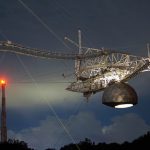
A new calculation compares the effort so far to exploring a hot tub’s–worth of Earth’s oceans
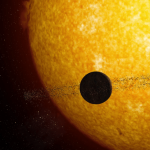
If aliens love satellites as much as we do, we might be able to spot them
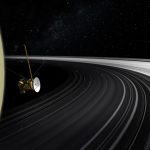
A new analysis of Cassini data could shed light on the origins of the massive belts

An international team of researchers from the United States, Taiwan and France provides new evidence that phosphates — a key element in the building blocks — were generated in outer space and delivered to Earth in its first one billion years by meteorites or comets. The findings are published in the journal Nature Communications.
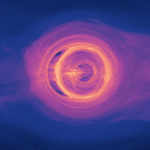
A new model is bringing scientists a step closer to understanding the kinds of light signals produced when two supermassive black holes, which are millions to billions of times the mass of the Sun, spiral toward a collision.
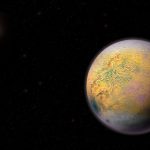
Massively elongated orbit suggests object is influenced by theoretical giant Planet Nine in Oort Cloud region