Moon of Jupiter prime candidate for alien life after water blast found0
- From Around the Web, Space
- May 15, 2018
Nasa’s Galileo spacecraft flew through a giant plume of water that erupted from the icy surface of Europa, new analysis shows

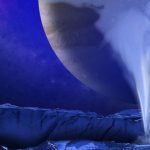
Nasa’s Galileo spacecraft flew through a giant plume of water that erupted from the icy surface of Europa, new analysis shows
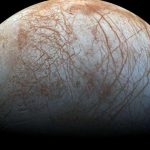
A fresh look at data from a 1997 flyby of Jupiter’s moon, Europa, suggests that NASA’s Galileo spacecraft flew directly through a watery plume, raising hopes of probing the jets for signs of life around the second planet from Earth.
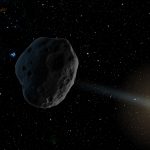
Almost 8 years ago, the Catalina Sky Survey discovered an asteroid as wide as a football field.
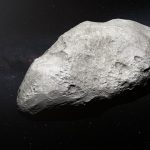
Astronomers have spotted a carbon-rich asteroid in the icy region beyond Neptune called the Kuiper Belt — the first such asteroid ever found exiled from the inner solar system.
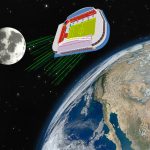
An asteroid that nobody knew was coming whizzed by us a few weeks ago.
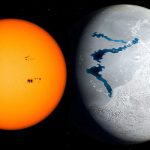
FEWER and fewer sunspots are appearing on the Sun as ball of fire prepares to go into a solar minimum which could lead to a mini Ice Age.

Today’s launch will mark the debut of a slightly different rocket, called Falcon 9 Block 5, that SpaceX has crafted to more quickly send an already used rocket back into space
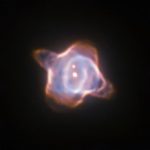
An international team of astronomers using Hubble have been able to study stellar evolution in real time.
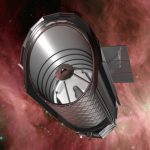
We may soon be on our way to Venus. A mission to our neighbouring planet is one of three finalists in the running to be the European Space Agency’s (ESA) next mission in its Cosmic Vision programme.
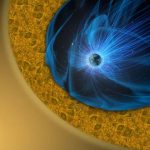
When the solar wind – which is really a driving rain of charged particles from the sun – strikes Earth’s protective magnetic field, the shock generates roiling, turbulent magnetic fields that enshroud the planet and stretch for hundreds of thousands of miles.