More hints of Martian hot springs may hold promise for Mars 2020 mission0
- From Around the Web, Space
- July 27, 2017
One potential landing site appears to have ridges that hint at past hydrothermal activity

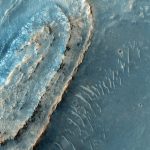
One potential landing site appears to have ridges that hint at past hydrothermal activity
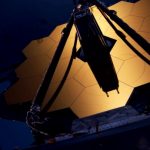
The super-sized successor to NASA’s legendary Hubble Space Telescope is more than a year away from deploying its massive two-storey tall, gold-plated mirrors in the harshness of deep space. That’s why scientists are busy freezing the US$9 billion, 6,200 kilogram spacecraft to see if they can break it here on Earth.
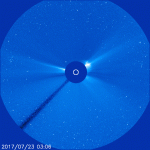
On Sunday July 23rd, a spectacular CME emerged from the farside of the sun.
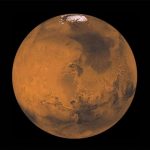
The origin and nature of Mars is mysterious. It has geologically distinct hemispheres, with smooth lowlands in the north and cratered, high-elevation terrain in the south. The red planet also has two small oddly-shaped oblong moons and a composition that sets it apart from that of the Earth.
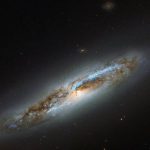
Scientists have discovered mystery signals coming from a star 11 light-years away. The “very peculiar” pulses appear to be unique to the red dwarf, scientists say, with observations of similar nearby stars showing no similar behavior.

Unchecked climate change would eventually lead to widespread devastation on Earth.
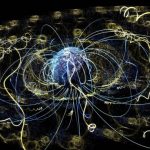
NASA’s Van Allen Probes have observed a new population of space sound waves, called plasmaspheric hiss, which are important in removing high-energy particles from around Earth that can damage satellites.
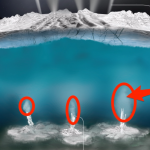
Searching for aliens is a tricky business. Most likely, the first alien life we discover will be hidden beneath miles of ocean on a distant world like Jupiter’s moon Europa or Saturn’s moon Enceladus.

Scientists have long held the belief that planets — including Earth — were built from rocky asteroids, but new research challenges that view.

A new study of a nearby cluster of newly formed stars reveals that brown dwarfs may rival stars in the Milky Way in number, with one brown dwarf for every two bona fide stars.