New Satellite “Mayak” Might Light Up the Sky0
- From Around the Web, Space
- July 19, 2017
Russia’s first crowd-funded satellite, named Mayak (Russian for “beacon of light”), promises to be the “brightest object in the night sky next to the Moon.”

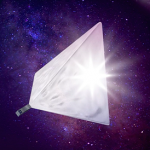
Russia’s first crowd-funded satellite, named Mayak (Russian for “beacon of light”), promises to be the “brightest object in the night sky next to the Moon.”

Astronomers say they’ve detected “strange signals” coming from the direction of a small, dim star located about 11 light-years from Earth.

Sealed behind the steel doors of two bunkers in a Beijing suburb, university students are trying to find out how it feels to live in a space station on another planet, recycling everything from plant cuttings to urine.

While fighting climate change and providing health care are both just too economically burdensome for America, members of the House believe there’s still enough cash to fund a space army that would fight off… the space enemies.
Spiral galaxies are found to be strongly rotating, with an angular momentum higher by a factor of about 5 than ellipticals. In a new study, the researchers have traced back the dichotomy in the angular momentum of spiral and elliptical galaxies to their different formation history. In particular, the low angular momentum of ellipticals is mainly originated by nature in the central regions during the early galaxy formation process.
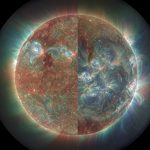
Never judge a quiet sun by its boring name. A trove of data from a NASA mission finds that the seemingly low-activity areas of the sun are not as dormant as the name might suggest.
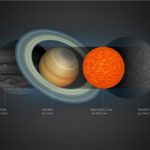
The smallest star yet measured has been discovered by a team of astronomers. With a size just a sliver larger than that of Saturn, the gravitational pull at its stellar surface is about 300 times stronger than what humans feel on Earth.
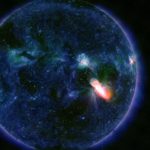
After days of suspenseful quiet, huge sunspot AR2665 finally erupted on July 14th (0209 UT), producing a powerful and long-lasting M2-class solar flare.

NASA is putting up the raw images of Jupiter’s red spot straight from the Juno Spacecraft.
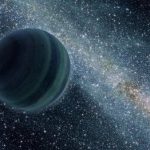
Last year, the existence of an unknown planet in our Solar system was announced. However, this hypothesis was subsequently called into question as biases in the observational data were detected. Now astronomers have used a novel technique to analyze the orbits of the so-called extreme trans-Neptunian objects and, once again, they point out that there is something perturbing them: a planet located at a distance between 300 to 400 times the Earth-Sun separation.