Looting Asteroids’ Water Will Make Launches Cheaper0
- From Around the Web, Space
- October 27, 2016
An asteroid mining concept could quickly deliver satellites to high orbit on the cheap.


An asteroid mining concept could quickly deliver satellites to high orbit on the cheap.
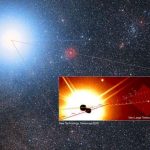
A very rare gravitational lensing event, set to occur in 2028, has been predicted by a team of French astronomers led by Pierre Kervella of the CNRS/Universidad de Chile. It will provide an ideal opportunity to look for evidence of a planet around a nearby star.
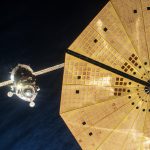
Tim Peake, one of the residents of the International Space Station, had taken many pictures of his time spent up there. Here is most of those pictures.
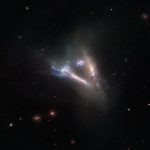
This large “flying V” is actually two distinct objects — a pair of interacting galaxies known as IC 2184.
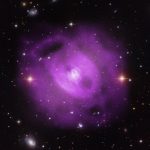
Astronomers have used NASA’s Chandra X-ray Observatory to show that, multiple eruptions from a supermassive black hole over 50 million years have rearranged the cosmic landscape at the center of a group of galaxies.
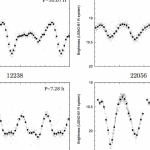
Kepler has had managed to ‘catch’ many meteors and asteroids in its mission to observe stars, and some astronomers have decided to use this data.
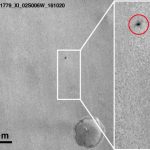
The gouge in the ground probably made by Europe’s Schiaparelli probe as it hit the surface of Mars on Wednesday has been imaged by a US satellite.

Planet Nine’s days of lurking unseen in the dark depths of the outer solar system may be numbered.
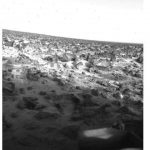
In 1976, two Viking landers became the first US spacecraft from Earth to touch down on Mars. They took the first high-resolution images of the planet, surveyed the planet’s geographical features, and analyzed the geological composition of the atmosphere and surface. Perhaps most intriguingly, they also performed experiments that searched for signs of microbial life in Martian soil.
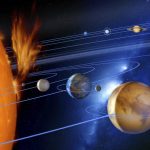
“So Planet Nine has tilted the entire disk of the solar system by 6 degrees and because we live on that disk…to us it looks like the sun is tilted, but it’s actually the other way around.”