9 Incredible Photos of our Universe0
- From Around the Web, Space
- August 2, 2016
Space is beautiful. These are nine images of the most beautiful sights we have of space that people have taken pictures of.


Space is beautiful. These are nine images of the most beautiful sights we have of space that people have taken pictures of.

Detailed analysis of data collected by Rosetta show that comets are the ancient leftovers of early Solar System formation, and not younger fragments resulting from subsequent collisions between other, larger bodies. Understanding how and when objects like Comet 67P/Churyumov-Gerasimenko took shape is of utmost importance in determining how exactly they can be used to interpret

Supermassive black holes in the universe are like a raucous choir singing in the language of X-rays. When black holes pull in surrounding matter, they let out powerful X-ray bursts. This song of X-rays, coming from a chorus of millions of black holes, fills the entire sky — a phenomenon astronomers call the cosmic X-ray background.
There is a mystery afoot surrounding the craters, or lack thereof, on Ceres, our nearest dwarf planet that resides within the asteroid belt between the orbits of Mars and Jupiter in our solar system.
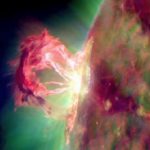
It is possible that a superflare could happen from our Sun, and if Earth is in the line of fire, it could very well end the world.

The idea of a space elevator to lift us into orbit is one of the oldest concepts in sci-fi, but thanks to the efforts of scientists in Japan, we might soon be seeing this fantastic feat of engineering become a reality at last.
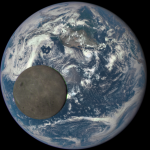
‘Almost unbelievable that this is a real photo.’’
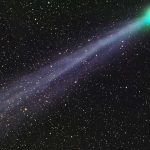
Indian astronomers have recently conducted spectrographic observations of long-period Comet Lovejoy to study its gas emission. They found that this comet showcases an asymmetric behavior at perihelion and an increase in the activity during the post-perihelion phase.
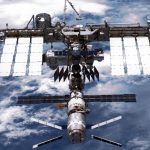
The U.S. military is preparing to deploy a new type of soldier to protect American interests where the country is most vulnerable, and that is in the limitless vacuum of outer space.

Its days are short–less than 11 hours–and its temperature is hot–a blistering 2,600 degrees Fahrenheit. Its rain showers arrive in the form of liquid iron and glass.