Faintest early-universe galaxy ever, detected and confirmed0
- From Around the Web, Space
- May 20, 2016
Astronomers have discovered the youngest galaxy ever born.

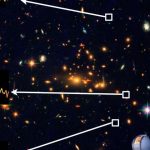
Astronomers have discovered the youngest galaxy ever born.
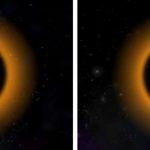
New findings based on a year’s worth of observations from NASA’s Van Allen Probes have revealed that the ring current – an electrical current carried by energetic ions that encircles our planet – behaves in a much different way than previously understood.

690 Reports The AMS has received nearly 700 reports so far about a fireball event over Northeastern US on May 17th 2016 around 12:50am EDT (4:50 UT). The fireball was seen primarily from Maine but witnesses from Vermont, New Hampshire, New Jersey, Massachusetts, New York, Rhode Island, Pennsylvania, Connecticut, Ontario (Canada) and Québec (Canada) also

A mysterious spike of methane picked up by the Curiosity rover two years ago has yet to reoccur.
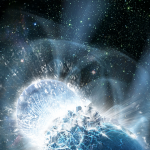
Distant neutron stars colliding into each other gives scientists clues to the creation of our world’s r-process elements.

The signs of an ancient tsunami on Mars shows a very good spot to search for biosignatures.
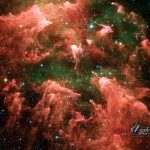
Using recent advancements in Australian telescope technology, a Monash University-led research team has made an unexpected discovery that a large group of stars are dying prematurely, challenging our accepted view of stellar evolution.
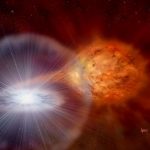
Some supernovae have a reserve tank of radioactive fuel that cuts in and powers their explosions for three times longer than astronomers had previously thought.
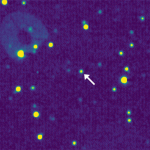
The New Horizons satellite has collected data about an object that is in the the Kuiper Belt.

Astronomers have discovered an Earth-like exoplanet that is the size of Neptune.