Microscopic “Timers” Reveal Likely Source of Galactic Space Radiation0
- From Around the Web, Space
- April 21, 2016
Recent research shows that galactic cosmic rays flowing into our solar system originate in clusters like these.

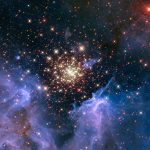
Recent research shows that galactic cosmic rays flowing into our solar system originate in clusters like these.
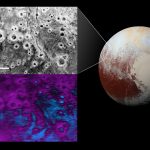
Within Pluto’s informally named Vega Terra region is a field of eye-catching craters that looks like a cluster of bright halos scattered across a dark landscape.

Studies lead to believe that Mars had more water than we originally believed.

Mike Brown: that’s where it is (maybe)
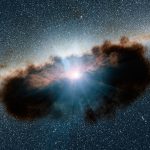
The ‘dust doughnut’ is a lot more interesting than normal space dust, for it surrounds a supermassive black hole.
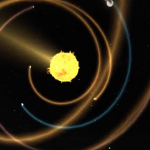
A trip through the Galaxy, showing relative movement, and the planet’s paths over time.
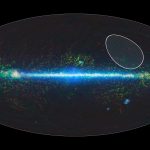
The object, called WISEA J114724.10−204021.3, is thought to be an exceptionally low-mass “brown dwarf,” which is a star that lacked enough mass to burn nuclear fuel and glow like a star.
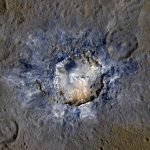
“The crater’s polygonal nature (meaning it resembles a shape made of straight lines) is noteworthy because most craters seen on other planetary bodies, including Earth, are nearly circular,”
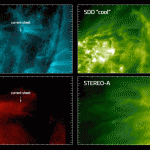
Getting the right positions to study solar flares and how current sheets work.

Star Gliese 832 holds a habitable planet in its solar system.