James Webb Space Telescope may have spotted the oldest, most distant known galaxy0
- From Around the Web, Space
- August 11, 2022
Using the most powerful space telescope ever built, astronomers spotted a galaxy that existed 13.4 billion years ago

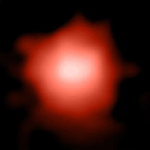
Using the most powerful space telescope ever built, astronomers spotted a galaxy that existed 13.4 billion years ago
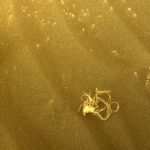
NASA’s Perseverance rover captured an unusual image of something lying in the red sand of Mars: a bundle of string.
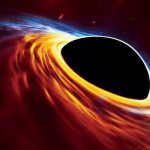
This behemoth has been powering an ultrabright quasar for 9 billion years.
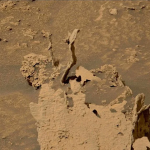
The Curiosity rover has found an outstanding rock formation piercing the alien landscape of Mars. Amongst the shallow sands and boulders of the Gale Crater rise several twisting towers of rock – the spikes of sediment look almost like frozen streams of water poured from an invisible jug in the sky.
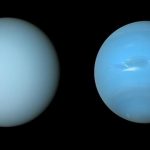
Neptune and Uranus are so similar that scientists sometimes refer to the distant, icy planets as planetary twins. But these ice giants have one big difference: their color.
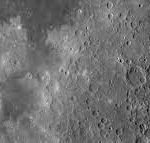
There are water molecules and ice up on the Moon, so how did they get there? Asteroid and comet collisions are likely to have produced some of it, but a new study suggests another source of lunar water: the Earth’s atmosphere.
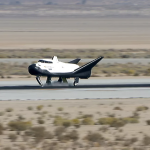
The private spacecraft could be flying cargo missions to the space station as soon as 2023.
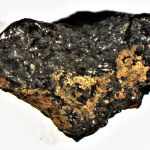
A rare stellar death may have formed a rock that eventually landed in Egypt.
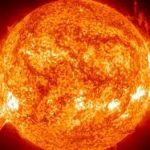
Astronomers have found that the sun is more metallic than we previously thought, potentially solving an astronomical mystery that scientists have grappled with for years.
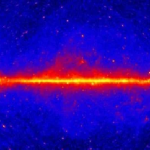
Something deep in the heart of the Milky Way galaxy is glowing with gamma radiation, and nobody can figure out for sure what it might be.