Nasa’s Perseverance rover is halfway to Mars – but still has much more than half of its journey to go0
- From Around the Web, Space
- October 30, 2020
The rover is taking a curved route due to the Sun’s gravitational pull


The rover is taking a curved route due to the Sun’s gravitational pull
Astronomers have discovered a planetary free agent floating through the Milky Way, unbound to the gravity of any nearby stars. The discovery, detailed Thursday in Astrophysical Journal Letters, suggests the Milky Way may be teeming with rogue planets.

The LIGO Scientific Collaboration and Virgo Collaboration released a catalog of results from the first half of its third observing run (O3a), and scientists have detected more than three times as many gravitational waves than the first two runs combined.

A University of Hawaiʻi Institute for Astronomy (IfA) astronomer has revealed critical new findings linked to a large asteroid expected to pass extremely close to Earth.

Astronomers get to the heart of the Milky Way.

Finding Planet Nine may require looking at telescope images in a different light.
NASA’s Perseverance rover launched for Mars in late July, carrying with it a small helicopter and a suite of instruments to increase exploration of the Red Planet.

In the search to discover the origins of our solar system, an international team of researchers has compared the composition of the sun to the composition of the most ancient materials that formed in our solar system: refractory inclusions in unmetamorphosed meteorites.

Canada’s NorthStar Earth & Space and Thales Alenia Space said on Tuesday they will begin work on a commercial satellite system to combat the threat of collisions in space.
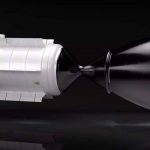
A company from Seattle called Ultra Safe Nuclear Technologies (USNC-Tech) has developed a concept for a new type of propulsion unit and delivered details to NASA. The company claims that the new Nuclear Thermal Propulsion (NTP) engine is safer and more reliable than previous designs.