The Artemis Accords take shape0
- From Around the Web, Space
- October 27, 2020
It was a signing ceremony for the Zoom era.

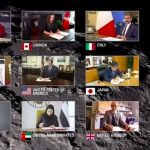
It was a signing ceremony for the Zoom era.
The moon lacks the bodies of liquid water that are a hallmark of Earth but scientists said on Monday lunar water is more widespread than previously known, with water molecules trapped within mineral grains on the surface and more water perhaps hidden in ice patches residing in permanent shadows.

Earth could be visible to alien civilisations on planets outside our solar system, scientists have found.
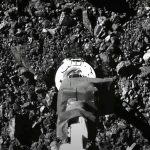
A NASA spacecraft is stuffed with so much asteroid rubble from this week’s grab that it’s jammed open and precious particles are drifting away in space, scientists said Friday.
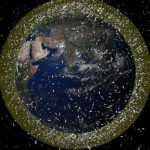
A Senate bill would authorize the Office of Space Commerce to take over civil space traffic management, but funding for that work has yet to be appropriated.
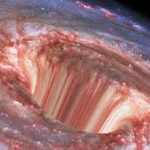
Black holes are powerful engines of pure gravity, capable of pulling on objects so intensely that they can’t possibly escape.
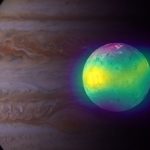
Astronomers using the Atacama Large Millimeter/submillimeter Array (ALMA) have spotted airborne plumes of sulfur dioxide (SO2), sulfur monoxide (SO), and potassium chloride (KCl) from Io’s active volcanoes.
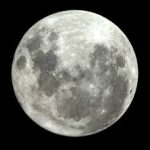
NASA will announce an exciting new discovery about the Moon from the Stratospheric Observatory for Infrared Astronomy (SOFIA) at a media teleconference at 12 p.m. EDT Monday, Oct. 26. Audio of the teleconference will stream live on the agency’s website.
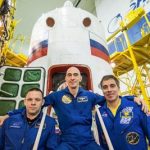
After launching to the International Space Station on April 9, NASA astronaut Chris Cassidy and Russian cosmonauts Anatoly Ivanishin and Ivan Vagner returned to Earth on Wednesday, October 21.
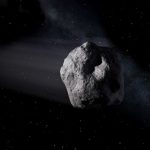
As soon as he saw the data, Paul Chodas knew something was strange about the near-Earth object that had been designated 2020 SO.