Can ripples on the sun help predict solar flares?0
- From Around the Web, Space
- September 24, 2020
Scientists analyze sunquakes to pinpoint flare energy source, perhaps predict flare severity

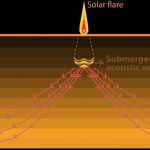
Scientists analyze sunquakes to pinpoint flare energy source, perhaps predict flare severity

Mars, also known as the red planet, has been the focus of numerous research studies, as some of its characteristics have sparked discussions about its possible inhabitability. The National Aeronautics and Space Administration (NASA) and a few other space agencies have thus sent a number of rovers and other spacecraft to Mars with the hope of better understanding its geology and environment.

Red giant stars reveal that planets or even other stars may influence the shells of gas and dust
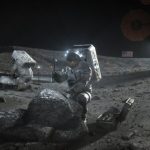
The US space agency (Nasa) has formally outlined its $28bn (£22bn) plan to return to the Moon by 2024.
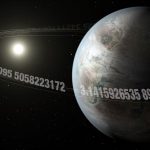
The pi planet’s surface is probably too hot to support life as we know it.
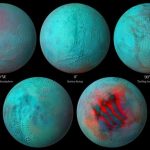
Enceladus may be even more interesting than we thought.

Astronomers have discovered two planets orbiting a bright dwarf star in the binary stellar system Gliese 414.

An atmospheric light show previously relegated to planets and Jupiter moons is found on comet using data from ESA’s Rosetta spacecraft
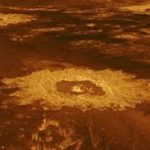
The discovery of phosphine on Venus hints at life in its clouds, but finding out won’t be easy
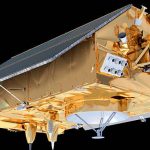
Media accreditation is open for the launch of the Sentinel-6 Michael Freilich satellite, an international collaboration between NASA and several partners. This is the first of two identical satellites to be launched sequentially to continue observations of sea level change for at least the next decade. The spacecraft is targeted for liftoff Nov. 10 at 2:31 p.m. EST (11:31 a.m. PST) from Vandenberg Air Force Base (VAFB) in California.