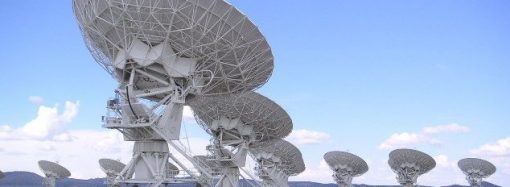
How do you clean up clingy space dust? Zap it with an electron beam0
- From Around the Web, Space
- September 16, 2020
A new approach to space housekeeping sends charged dust particles flying


A new approach to space housekeeping sends charged dust particles flying
The European Space Agency (ESA) has signed a design, manufacturing, and testing contract with OHB of Germany for their Hera planetary defense mission, marking a major advancement toward the agency’s commitment to NASA for their joint Asteroid Impact and Deflection Assessment project.
Using NASA’s Transiting Exoplanet Survey Satellite (TESS) and the HARPS fiber-fed Echelle spectrograph mounted at the 3.6-m telescope of ESO’s La Silla observatory, astronomers have discovered and confirmed two massive transiting planets around the G-type dwarf star TOI-763.

Not only is the mysterious substance invisible, but it’s also not all where we thought it was
Venus, the Evening Star, may gleam prettily in our night sky, but up close it’s about as inhospitable as a rocky planet can be, with sulphuric acid rains, a suffocating CO2 atmosphere, and a surface atmospheric pressure up to 100 times greater than Earth’s.
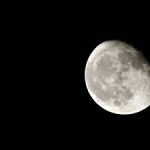
The agency announced it is buying lunar soil from a commercial provider as part of a technology development program
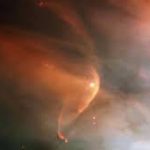
The mysterious dark vacuum of interstellar space is finally being revealed by two intrepid spacecraft that have become the first human-made objects to leave our Solar System.
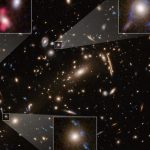
On a fine scale, the Universe seems lumpier than it should be.
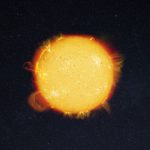
Astronomers from NSF’s National Solar Observatory (NSO) will play important roles in two of five concept studies recently announced by NASA. These five endeavors have each been granted $1.25 million by the Heliophysics division of NASA to investigate the feasibility of cutting-edge missions to study the Sun and its connection to Earth.
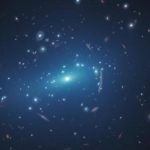
Observations by the NASA/ESA Hubble Space Telescope and the European Southern Observatory’s Very Large Telescope (VLT) in Chile have found that something may be missing from the theories of how dark matter behaves. This missing ingredient may explain why researchers have uncovered an unexpected discrepancy between observations of the dark matter concentrations in a sample of massive galaxy clusters and theoretical computer simulations of how dark matter should be distributed in clusters. The new findings indicate that some small-scale concentrations of dark matter produce lensing effects that are 10 times stronger than expected.