The Pentagon Moves To Launch Its Own Experimental Mini Space Station0
- From Around the Web, Space
- July 21, 2020
The goal is for the space-based platform to support various test, training, and other missions, possibly with humans aboard in the future.

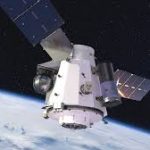
The goal is for the space-based platform to support various test, training, and other missions, possibly with humans aboard in the future.
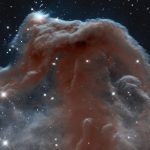
Scientists have found the interstellar organic matter could produce an abundant supply of water by heating, suggesting that organic matter could be the source of terrestrial water.
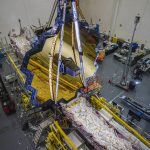
NASA officials said Thursday the launch of the James Webb Space Telescope will be delayed seven months to Oct. 31, 2021, a schedule slip that takes into account work slowdowns caused by the coronavirus pandemic and the amount of testing required on the observatory before its shipment to French Guiana for liftoff on a European Ariane 5 rocket.
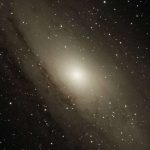
Despite the vast numbers of galaxies we can study, astronomers have struggled to make sense of their evolution. In particular, there is the question of what causes some galaxies to “die”, ceasing star formation, but the galactic structure and black hole size may provide an answer.
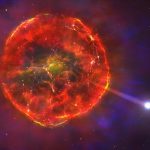
A white dwarf star called SDSS J124043.01+671034.68 (SDSS J1240+6710) is traveling at 900,000 km/h (559,234 mph) through our Milky Way Galaxy. It also has a particularly low mass for a white dwarf — only 40% the mass of our Sun — which would be consistent with the loss of mass from a partial supernova. According to new research, SDSS J1240+6710 was most likely a member of a binary system that survived a so-called thermonuclear supernova event, which sent it and its companion flying through the Milky Way in opposite directions.

Just how old is the universe? Astrophysicists have been debating this question for decades. In recent years, new scientific measurements have suggested the universe may be hundreds of millions of years younger than its previously estimated age of approximately 13.8 billions of years.
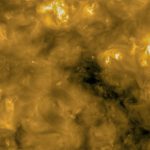
New pictures are the first from the Solar Orbiter spacecraft

Scientists are investigating evidence of ancient terrestrial microbes preserved in Australia as well as mineral maps derived from Mars orbiter data to shed light on how to search for life on Mars.
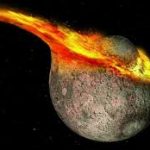
It turns out the moon is a little younger than scientists previously thought — about 85 million years younger, to be precise.
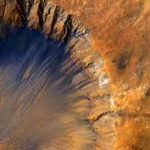
NASA wants to explore Mars, but a new agency directive shows that avoiding “extraterrestrial life and bioactive molecules” hitching a ride back to Earth is a top priority.