Highest-Resolution Solar Telescope Ever Released Incredible First Images of the Sun0
- From Around the Web, Space
- January 30, 2020
This image is the first high-resolution shot from the 4-meter Daniel K. Inouye Solar Telescope in Hawai’i.


This image is the first high-resolution shot from the 4-meter Daniel K. Inouye Solar Telescope in Hawai’i.

Scientists from Washington University, St. Louis, Caltech and the University of Chicago have found presolar grains — tiny bits of solid interstellar material formed before the Sun was born — in Curious Marie, a sample of the famous Allende meteorite.
For more than 16 years, the orbiting observatory has revealed wonders of the cosmos

A pair of researchers presented a wild new theory in a new paper.

The module will attach itself to the ISS’ Node 2 forward port.

This isn’t how black holes are supposed to behave.

Astronomers say this planet is the hottest identified so far.

The newly unveiled logo for US Space Force appears to have boldly gone where Star Trek went before.
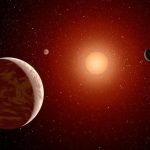
With over 4,000 confirmed exoplanets, we’re starting to get an idea of which types are common and which are rare. We’ve learned that our solar system is rather unusual in ways you wouldn’t expect. Take, for example, the presence of large planets orbiting small stars.
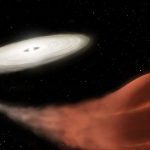
NASA’s Kepler spacecraft was designed to find exoplanets by looking for stars that dim as a planet crosses the star’s face. Fortuitously, the same design makes it ideal for spotting other astronomical transients—objects that brighten or dim over time. A new search of Kepler archival data has uncovered an unusual super-outburst from a previously unknown dwarf nova. The system brightened by a factor of 1,600 over less than a day before slowly fading away.