Rare tile of mythical beast discovered in 14th-century cesspit0
- Ancient Archeology, From Around the Web
- March 6, 2020
The cesspit used to hold human waste before it became a fashionable cellar.


The cesspit used to hold human waste before it became a fashionable cellar.

Around 3 billion years ago, Earth may have been covered in water – a proverbial “waterworld” – without any continents separating the oceans.
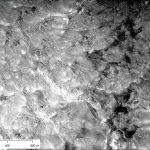
In the 1950s and early ’60s, with the Cold War at its peak, the United States flew U2 spy planes across Europe, the Middle East, and central eastern Asia, taking images of interesting military targets. Though the missions typically connected Point A to Point B, say an air field and an important city, in many cases the camera kept recording between those spots, capturing thousands of photos of the desert, steppes, fields, and villages below.

In the 1980s, paleontologists found a dinosaur nesting ground with dozens of nestlings in northern Montana and identified them as Hypacrosaurus stebingeri, a species of herbivorous duck-billed dinosaur that lived some 75 million years ago (Cretaceous period). Now, a team of researchers from the United States, Canada, and China has investigated molecular preservation of calcified cartilage in one of the Hypacrosaurus stebingeri nestlings at the extracellular, cellular and intracellular levels. They’ve found chemical markers of DNA, preserved fragments of proteins and chromosomes in the dinosaur chondrocytes (cartilage cells). The findings further support the idea that these original molecules can persist for tens of millions of years.
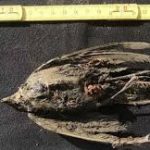
A frozen bird was found on the ground in Siberia in 2018, but it had been there much longer than the latest snowfall. The bird is actually about 46,000 years old and was well-preserved in Siberian permafrost, scientists have determined.
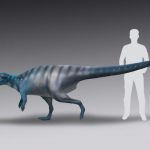
The dinosaur in the cupboard under the stairs.

Traces of unknown ancestor emerged when researchers analysed genomes from west African populations

Four thousand years ago, the last woolly mammoths quietly died on their final bastion – the isolated Wrangel Island, north of Russia in the frozen Arctic. Their demise was sudden, and strange; now, new evidence points to the mammoths themselves as partial agents of their own demise.
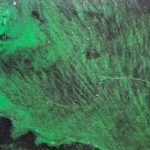
The smoldering crater left by the apocalyptic space rock became a nice home for blue-green algae within years of the impact.
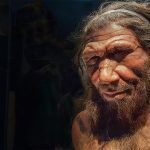
Source: Science Magazine For 10 years, geneticists have told the story of how Neanderthals—or at least their DNA sequences—live on in today’s Europeans, Asians, and their descendants. Not so in Africans, the story goes, because modern humans and our extinct cousins interbred only outside of Africa. A new study overturns that notion, revealing an unexpectedly