Scorched ancient scrolls could be made readable once again0
- Ancient Archeology, From Around the Web, Science & Technology
- October 9, 2019
Carbonized papyrus scrolls may again see the light after thousands of years.

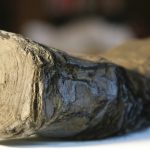
Carbonized papyrus scrolls may again see the light after thousands of years.

Israel’s Antiquities Authority on Sunday said that researchers have discovered the remains of a large, 5,000-year-old city that sheds new light on experts’ understanding of the period.

Just less than 13,000 years ago, the climate cooled for a short while in many parts of the world, especially in the northern hemisphere.

A fossilized pelvis found in Hungary suggests human ancestors were able to stand upright much earlier than anthropologists had realized.

Researchers hope to use bubbles trapped in ice to help predict effect of CO2 on the Earth’s climate

Unprecedented feat reveals little-known Denisovans resembled Neanderthals but had ‘super-wide’ skulls

466 million years ago, the break-up of a large space rock may have led to major changes in our planet’s biodiversity

Palaeontologists have identified one of the largest flying creatures ever to live on planet Earth. This gargantuan creature, which soared through the Cretaceous skies over 76 million years ago, has been named Cryodrakon boreas, which means ‘frozen dragon of the north.’

The metallic asteroid Psyche has mystified scientists because it is less dense than it should be, given its iron-nickel composition. Now, a new theory could explain Psyche’s low density and metallic surface.

When a colossal space rock came crashing down 66 million years ago onto what is now the Yucatan Penninsula in Mexico, it triggered widespread changes on Earth and abruptly ended the reign of the dinosaurs. Now, researchers are focusing on learning the extent of the asteroid’s destructive might and the immediate aftermath at ground zero, a location now known as the Chicxulub crater.