The Lifespan of Ancient Civilizations0
- Ancient Archeology, From Around the Web
- March 5, 2019
In the graphic below, the University of Cambridge’s Luke Kemp compiled a list of civilisations to compare how long they lasted.

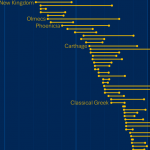
In the graphic below, the University of Cambridge’s Luke Kemp compiled a list of civilisations to compare how long they lasted.

Two studies agree that ancient eruptions likely played a supporting role in the mass extinction. But the devil is still in the details.

A closer look at some unimaginably ancient fossils suggests complex life may have evolved much earlier and more quickly than scientists previously thought.
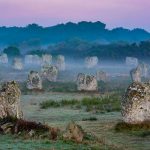
Stonehenge may be the most famous example, but tens of thousands of other ancient sites featuring massive, curiously arranged rocks dot Europe.

The genetic footprint of a “ghost population” may match that of a Neanderthal and Denisovan hybrid fossil found in Siberia

Once, about 300 million years ago, when southern Africa was joined at South America’s hip, this now arid region was covered in a wide expanse of glaciers.
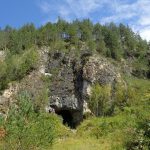
Scientists using sophisticated techniques to determine the age of bone fragments, teeth and artifacts unearthed in a Siberian cave have provided new insight into a mysterious extinct human species that may have been more advanced than previously known.

A new species of oviraptorosaur has been unearthed in the Gobi Desert of Mongolia.

Iridium, a metal associated with the asteroid that ended the Cretaceous era can act like a stealth bomb, entering the nucleus of a cancer cell.

The story of humankind may need some editing.