Prehistoric humans mined metal 12,000 years ago0
- Ancient Archeology, From Around the Web
- March 14, 2017
Mining for metals began as early as 12,000 years ago in the Stone Age in Upper Silesia, in present-day Poland, research on peat bogs has found.

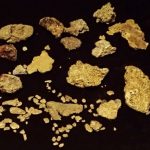
Mining for metals began as early as 12,000 years ago in the Stone Age in Upper Silesia, in present-day Poland, research on peat bogs has found.

Ancient texts describe a time in the history of ancient Egypt known as the Predynastic era, where ‘Gods’ ruled for hundreds of years over Ancient Egypt, Akhenaten could easily have been an ancient Egyptian Pharaoh that belonged to that period, only out of place and time. Some #AncientAlien theorists interpret his elongated skull as a sign of extraterrestrial heritage.
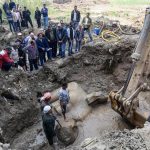
The unearthed pieces are made of quartzite and may depict one of Egypt’s most famous rulers.
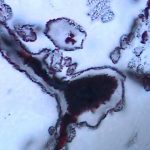
Scientists have discovered what they say could be fossils of some of the earliest living organisms on Earth.
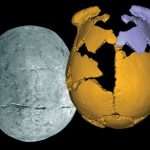
Newly uncovered skulls in China have both human and Neanderthal features, a mix that so far hasn’t been seen in a hominid fossil.
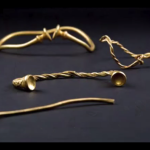
Two friends have unearthed jewellery which could be the oldest Iron Age gold discovered in Britain.
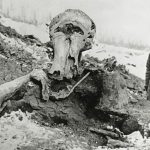
The last woolly mammoths to walk the Earth were so wracked with genetic disease that they lost their sense of smell, shunned company, and had a strange shiny coat.

Dozens of prehistoric hominin footprints have been discovered in Norfolk and have been dated back to nearly one million years old. These are the oldest footprints ever discovered outside of Africa and could change the timeline of when the earliest human species migrated out of Africa and into Europe. The study comes from a collaboration of British research facilities and the results were published on PLOS ONE.
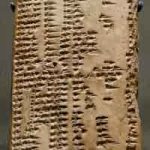
The oldest known dictionaries are cuneiform tablets from the Akkadian empire with biliingual wordlists in Sumerian and Akkadian discovered in Ebla in modern Syria.

In a quiet corner of the Republic of Georgia, hidden beneath medieval and Bronze Age ruins, the hominin fossil jackpot of Dmanisi is rewriting the story of human evolution.