A Canadian Company Invented An Invisibility Shield That Works Just Like Harry Potter’s Cloak0
- From Around the Web, Science & Technology
- October 30, 2019
No way muggles could do this.

No way muggles could do this.

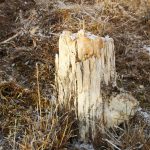
A hunting party in Nunavut stumbled upon a rare sight: a tree stump poking out of the permafrost. However it got there, the wood will likely tell scientists secrets of the distant past

NASA will send a golf cart-sized robot to the moon in 2022 to search for deposits of water below the surface, an effort to evaluate the vital resource ahead of a planned human return to the moon in 2024 to possibly use it for astronauts to drink and to make rocket fuel, the U.S. space agency said on Friday.

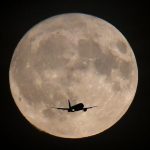
One report says 200,000 years while another stated 300,000

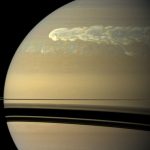
The tempests are larger than other squalls but smaller than massive Great White Spots

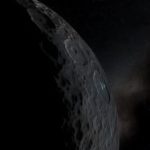
A large asteroid could be reclassified as a dwarf planet — which could make it the smallest in the solar system — after new research revealed it’s shape, astronomers said on Monday.

Boris Johnson’s gung-ho claims may be wide of the mark, but scientists pursuing the holy grail of energy generation are taking giant steps

In recent years, scientists have made impressive headway with organoids—clumps of tissue or bundles of cells that resemble a miniature version of a human organ. But as the technology continues to progress at rapid speeds, are the ethical considerations playing catch up?

In the future, we’re expected to have sites on other planets, and the conflict about it is that if they should be called settlement or colonization.

Astronomers using NASA’s Stratospheric Observatory for Infrared Astronomy (SOFIA) have observed an unusually warm, dusty debris disk around BD +20 307, a binary star system located 300 light-years away in the constellation of Aries. Their results suggest that an extreme collision between two rocky planetary bodies is the most likely origin for the warm dust in the BD +20 307 system.