
Asteroid Dust Triggered an Explosion of Life on Ancient Earth0
- Ancient Archeology, From Around the Web, Space
- September 19, 2019
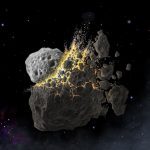
466 million years ago, the break-up of a large space rock may have led to major changes in our planet’s biodiversity

466 million years ago, the break-up of a large space rock may have led to major changes in our planet’s biodiversity

Palaeontologists have identified one of the largest flying creatures ever to live on planet Earth. This gargantuan creature, which soared through the Cretaceous skies over 76 million years ago, has been named Cryodrakon boreas, which means ‘frozen dragon of the north.’

The behemoth at the center of the galaxy flared up in near-infrared wavelengths

Inspired by octopuses, researchers have developed a structure that senses, computes and responds without any centralized processing — creating a device that is not quite a robot and not quite a computer, but has characteristics of both. The new technology holds promise for use in a variety of applications, from soft robotics to prosthetic devices.

“I have a much easier time imagining how we understand the Big Bang than I have imagining how we can understand consciousness,” says Edward Witten, theoretical physicist at the Institute for Advanced Study in Princeton, New Jersey who has been compared to Isaac Newton and Einstein.

The age debate has taken another turn.

Small methane-filled lakes on the surface of Titan were likely formed by explosive, pressurized nitrogen just under the hazy moon’s surface, according to a new analysis of radar data from NASA’s Cassini spacecraft.

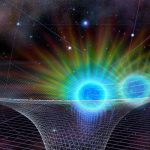
General relativity suggests the spacetime oddities can be fully described by their mass and spin

A new material created by researchers has qualities that are similar to those of plastic, but because it is biodegradable, the new material is more eco-friendly.

The metallic asteroid Psyche has mystified scientists because it is less dense than it should be, given its iron-nickel composition. Now, a new theory could explain Psyche’s low density and metallic surface.