NASA’s InSight Lander Sees Stunning Sunrise and Sunset on Mars0
- From Around the Web, Space
- May 15, 2019
In April 2019, NASA’s InSight lander used its Instrument Deployment Camera (IDC) to capture a series of Martian sunrise and sunset images.

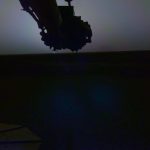
In April 2019, NASA’s InSight lander used its Instrument Deployment Camera (IDC) to capture a series of Martian sunrise and sunset images.
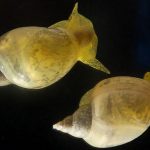
The first gene-edited snails confirm which gene is responsible for how a shell swirls

Most Europeans descend from a combination of European hunter-gatherers, Anatolian early farmers, and Steppe herders. But only European speakers of Uralic languages like Estonian and Finnish also have DNA from ancient Siberians. Now, with the help of ancient DNA samples, researchers reporting in Current Biology on May 9 suggest that these languages may have arrived from Siberia by the beginning of the Iron Age, about 2,500 years ago, rather than evolving in Northern Europe.

The neural network developed ‘number neurons’ similar to those in animal brains
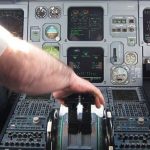
Pilot Atilla Senturk and his crew encountered a strange object during a routine flight from Istanbul to Cologne.

An all-Princeton research team has identified bacteria that can detect the speed of flowing fluids.
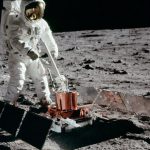
Scientists linked the seismic recordings with a NASA orbiter’s data on surface faults

Whether you believe UFOs are a product of a wild imagination or a real phenomenon, some local UFO videographers believe Northeast Ohio is a hot zone for UFO sightings.
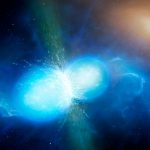
According to new research, a nearby binary neutron-star merger gave birth to 0.3% of the Earth’s heaviest elements, including gold, platinum and uranium; such an event may have occurred about 1,000 light-years away from the Pre-solar Nebula, approximately 80 million years before the formation of our Solar System.
Sean McWilliams, an assistant professor at West Virginia University, has developed a mathematical method for calculating black hole properties from gravitational wave data. He has written a paper describing his method and posted it on the arXiv preprint server. The paper has been accepted for publication in Physical Review Letters.