How Many Pyramids are in the World?0
- Ancient Archeology, From Around the Web
- November 29, 2017
If you ask yourself how many pyramids are in the world you will be lost in thoughts. And it least you wouldn’t find the right number.

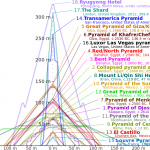
If you ask yourself how many pyramids are in the world you will be lost in thoughts. And it least you wouldn’t find the right number.

3200 Phaethon is an asteroid measuring about 3 miles across that roams our galaxy, passing in and out of planetary orbits on its journey. Next month, 3200 Phaethon will zoom by at 6.2 million miles from Earth, which, in space terms, is nearly too close for comfort.

The World Wide Web is all abuzz with Google Earth images of Antarctica that appear to show pyramids in the icy landscape.

It may not take an asteroid strike to transport life from one planet to another.

When people with incredible professional credentials come forward to talk about being covertly recruited for a ’20-years-and-back’ mission in space, that also have key pieces of collateral to prove their claims, it makes it hard not to listen — to at least ask more questions.
The melting Antarctic ice stream that is currently adding most to sea-level rise may be more resilient to change than previously recognised.

I have always been fascinated by the Egyptian pyramids. As a kid, I wasn’t even aware of the many other types of pyramids that exist on this planet, their significance, or incredible history.

A FORMER Nasa engineer spent years investigating alleged UFO sightings in space, and his verdict will send shockwaves through the alien believer community.

A group of archaeologists has carried out a new investigation of a pyramidal structure known as “El Volcán” in the valley of Nepeña in Peru.

Our everyday knowledge of time is that only the present ‘now’ exists. Everything that exists ‘now’ is contained in our present world (three-dimensional space). Events of the past and the future do not exist at all. The past is gone, the future not existing yet. Only the present exists. This is called presentism.