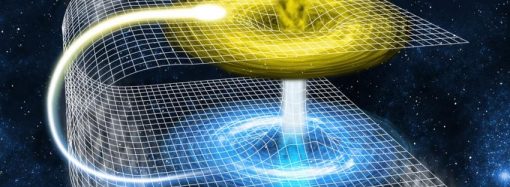
How the dinosaur-killing asteroid primed Earth for modern life0
- Ancient Archeology, Science & Technology
- January 18, 2020
Marine die-offs after the impact may have created opportunities for the life that survived around the globe, new data reveal.

Marine die-offs after the impact may have created opportunities for the life that survived around the globe, new data reveal.
San Diego Natural History Museum paleontologist describes a dinosaur that is new to science, offers view into dinosaur-bird evolution
There’s something really weird in the centre of the Milky Way.

Toxoplasma gondii can mess with all sorts of mice behaviors, a new study shows
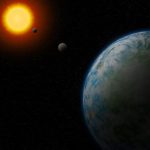
Astronomers have detected five new planets, eight planet candidates, and confirmed three previously reported planets, around nine nearby M-dwarf (red dwarf) stars. Among the new planets, Gliese 180d and Gliese 229Ac are super-Earths located in the conservative habitable zones of their host stars; Gliese 433c is a cold super-Neptune candidate belonging to an unexplored population of Neptune-like planets.

Lights from a medical marijuana farm created a strange purple glow in the sky recently above Snowflake, Arizona—located around 175 miles northeast of Phoenix.

When physicists detected signals of high-energy neutrinos coming from a rather unlikely direction in the cosmos, they naturally went looking for a powerful source that might explain it.

The incidents interrupted Exercise Mainbrace, a massive set of NATO war-game maneuvers.

Warm, cold, just right? Physicists at the University of California, Davis are taking the temperature of dark matter, the mysterious substance that makes up about a quarter of our universe.
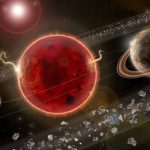
The star closest to the sun appears to host another world much colder than Earth