Russia Claims NASA Astronaut Had Mental Breakdown in Space, Damaged Equipment to Go Home Early0
- From Around the Web, Space
- August 18, 2021
It’s a bizarre smear campaign.

It’s a bizarre smear campaign.
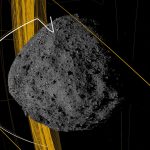
Mark the date: 24 September 2182. That’s the day, according to a study released today, that a half-kilometer-wide asteroid called Bennu—recently visited by NASA’s OSIRIS-REx spacecraft—has the greatest chance of colliding with Earth in the next 300 years. The researchers behind the NASA-sponsored study emphasize that the risk of an impact remains very small—one in 2700, or 0.037%—and that, armed with the wealth of data from OSIRIS-REx’s 2 years orbiting the asteroid, they now know much more about it and the risk it poses.
The findings might challenge established models of the formation of gas giants.
“How long can a fish hold its breath?”

The Solar System is positively lousy with magnetic fields. They drape around (most of) the planets and their moons, which interact with the system-wide magnetic field swirling out from the Sun.

Scientists have analysed the chemistry locked inside the tusk of a woolly mammoth to work out how far it travelled in a lifetime.

New ‘Tucker Carlson Originals’ looks at UFO evidence with famous theoretical physicist Michio Kaku

Heat spawned by high-speed charged particles slamming into the air above the poles spreads far

Whose job is it to take out the trash when the ISS is retired?
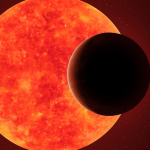
Astudy has found that exoplanets orbiting red dwarf stars may not be as badly affected by stellar radiation as scientists had previously suspected.