A Japanese Startup Will Try to Land on the Moon Next Year0
- From Around the Web, Science & Technology, Space
- December 24, 2016
Google Lunar X-Prize contestant Team HAKUTO has a promising rover that will be launched to the moon in the new year.


Google Lunar X-Prize contestant Team HAKUTO has a promising rover that will be launched to the moon in the new year.
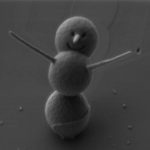
Days before Christmas, a research scientist at an Ontario university has created a microscopic figure he’s calling the world’s “smallest snowman.”
Researchers have discovered that tantalum carbide and hafnium carbide materials can withstand scorching temperatures of nearly 4000 degrees Celsius.
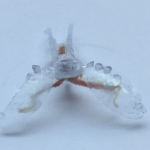
The newest robots to pave the way for synthetic creatures is able to move remarkably well like a manta ray.

Scientists with the China Academy of Space Technology (CAST) claim NASA’s results ‘re-confirm’ what they’d already achieved, and have plans to implement it in satellites ‘as quickly as possible.’

The first true brain-to-brain communication in people could start next year, thanks to huge recent advances.

Scientists are a little bit closer to unlocking the mystery of how the rules of the quantum realm translate to the rules of the classical physics of the observable world.

Hydrogen’s antimatter counterpart has shown its true colours, and they are just what physicists ordered.

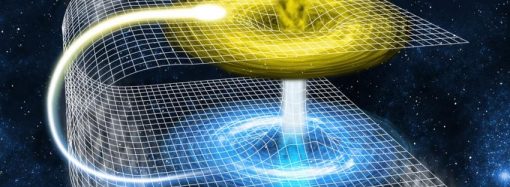
All you need is a wormhole, the Large Hadron Collider or a rocket that goes really, really fast.
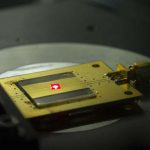
Researchers from the Harvard John A. Paulson School of Engineering and Applied Sciences have made the world’s smallest radio receiver – built out of an assembly of atomic-scale defects in pink diamonds.