
Video Archive
- Earth Mysteries, From Around the Web
- March 28, 2020
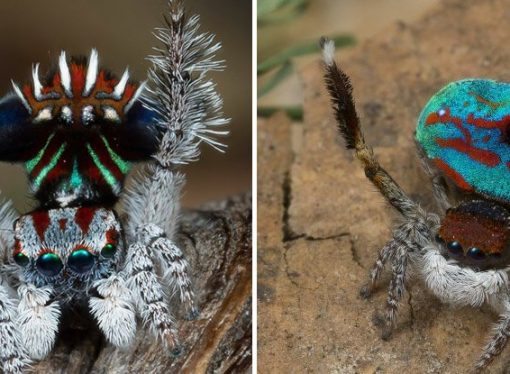
Peacock spiders keep dancing their way into our hearts. They’re tiny, they’re colourful, they’re fluffy and they have killer moves.
READ MORE
- From Around the Web, Science & Technology
- November 29, 2018
Human skin contains sensitive nerve cells that detect pressure, temperature and other sensations that allow tactile interactions with the environment. To help robots and prosthetic devices attain these abilities, scientists are trying to develop electronic skins. Now researchers report a new method in ACS Applied Materials & Interfaces that creates an ultrathin, stretchable electronic skin, which could be used for a variety of human-machine interactions.
READ MORE

- From Around the Web, Space
- July 1, 2020
The space agency gathered 425 million high-resolution images of the sun, which have now been stitched together to form the video
READ MORE
- From Around the Web, UFO News
- June 3, 2020
Phil Tindale got in touch to explain how as 10-year-olds in the South Australian town of Aldgate just over 40 years ago, he and his twin brother Rob witnessed a “hostile chase between two highly advanced craft resulting in one of those craft crashing into a tree”.
READ MORE

- From Around the Web, Science & Technology
- October 5, 2019
Known as the X-57 Mod II, the goal is to replace combustion engines on Tecnam P2006T aircraft.
READ MORE
- Earth Mysteries, From Around the Web
- July 29, 2020
A researcher says a woman was chased by Bigfoot in the Hudson Valley.
READ MORE