How radio astronomy put new eyes on the cosmos0
- From Around the Web, Space
- September 1, 2021
Radio telescopes have uncovered quasars and pulsars, and offered up the first pic of a black hole

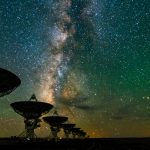
Radio telescopes have uncovered quasars and pulsars, and offered up the first pic of a black hole
Most of Mars is extremely inhospitable to life, but there may be a workaround. The areas near the entrances to caves should, in theory, be shielded from some of the harmful radiation that bombards the planet’s surface.

A new study’s “treasure map” suggests that a planet several times more massive than Earth could be hiding in our solar system, camouflaged by the bright strip of stars that make up the Milky Way.
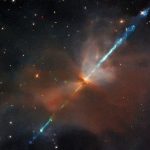
The photo captures a relatively uncommon phenomenon called a Herbig-Haro object.

Cambridge astronomers identify new hycean class of habitable exoplanets, which could accelerate search for life

Science and technology ministry’s funding arm proposes five-year project on building ‘ultra-large spacecraft’ to aid exploration and stay in long-term orbit
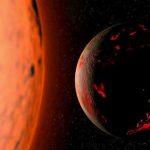
Our solar system is home to some unusual places we could potentially migrate to if Earth were to die.
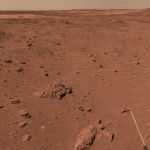
But first, a holiday while Mars is on the other side of the Sun

The recent detection of 2I/Borisov, the first known interstellar comet to visit our Solar System, implies that interstellar objects outnumber the non-interstellar ones in the Oort Cloud, whereas the reverse is true near the Sun due to the stronger gravitational focusing of bound objects, according to a new paper authored by Harvard & Smithsonian’s Center for Astrophysics astronomers Amir Siraj and Avi Loeb.
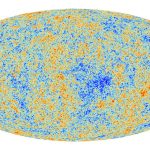
A new book tells the history of George Gamow, Fred Hoyle and the origin of the universe