This planetary remnant somehow survived the death of its sun0
- From Around the Web, Space
- April 5, 2019
A rare rocky relic orbiting a white dwarf may give insight into the future of our solar system


A rare rocky relic orbiting a white dwarf may give insight into the future of our solar system
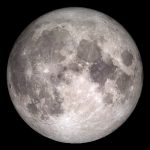
Little is known about the inner structure of the Moon, but a major step forward was made by a University of Rhode Island scientist who conducted experiments that enabled her to determine the temperature at the boundary of the Moon’s core and mantle.

The space agency is hoping to launch its first manned mission to the Red Planet within the next 14 years.

An international team of researchers has put a theory speculated by the late Stephen Hawking to its most rigorous test to date, and their results have ruled out the possibility that primordial black holes smaller than a tenth of a millimeter make up most of dark matter. Details of their study have been published in this week’s Nature Astronomy.

For a few decades now, the leading edge of science and especially astronomy has been at least partially dedicated to the search for one of the most fundamental philosophical questions we have — are we alone in the universe?

Event Horizon Telescope data are giving scientists an image of the Milky Way’s behemoth

Gas detected by Curiosity rover may have been released from fractured Martian permafrost

On Friday, March 29, Christina Koch and Anne McClain were scheduled to perform a spacewalk together to upgrade the power systems of the International Space Station.
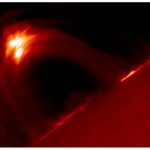
The sun’s magnetic field is ten times stronger than previously believed, new research from Queen’s University Belfast and Aberystwyth University has revealed.

New research suggests that deep groundwater could still be active on Mars and could originate surface streams in some near-equatorial areas on Mars.