Mars 2020: The Red Planet’s Next Rover0
- From Around the Web, Space
- March 15, 2018
NASA’s next Mars rover won’t just explore the Red Planet; it will, the space agency hopes, make it so a little bit of Mars might make it to Earth.

NASA’s next Mars rover won’t just explore the Red Planet; it will, the space agency hopes, make it so a little bit of Mars might make it to Earth.
An international group of researchers has discovered that an anomalous gamma-ray signal from Milky Way’s center comes from 10 billion-year-old stars, rather than dark matter as previously thought.
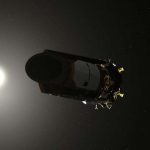
Trailing Earth’s orbit at 94 million miles away, the Kepler space telescope has survived many potential knock-outs during its nine years in flight, from mechanical failures to being blasted by cosmic rays. At this rate, the hardy spacecraft may reach its finish line in a manner we will consider a wonderful success. With nary a gas station to be found in deep space, the spacecraft is going to run out of fuel. We expect to reach that moment within several months.

A large team of Russian researchers from Rosatom, joined by three MIPT physicists, has modeled the impact of a nuclear explosion on an Earth-threatening asteroid.

The next time a hazardous asteroid lines Earth up in its crosshairs, we may be ready for the threat.
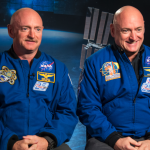
Space travel is dangerous for a lot of very obvious reasons — traveling off of Earth on a rocket has its risks, after all — but even when everything goes well it seems that a brief stay in space has the potential to alter a person’s very DNA.
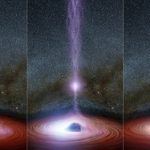
You don’t have to know a whole lot about science to know that black holes normally suck things in, not spew things out. But NASA detected something mighty bizarre at the supermassive black hole Markarian 335.

The vernal equinox is less than 10 days away. That means one thing: Cracks are opening in Earth’s magnetic field.
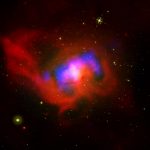
At the center of the Centaurus galaxy cluster, there is a large elliptical galaxy called NGC 4696. Deeper still, there is a supermassive black hole buried within the core of this galaxy.
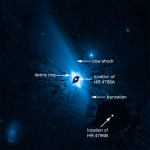
Astronomers have used NASA’s Hubble Space Telescope to uncover a vast, complex dust structure, about 150 billion miles across, enveloping the young star HR 4796A.