NASA’s Juno Spacecraft Completes Eleventh Jupiter Flyby, Delivers New Photos0
- From Around the Web, Space
- February 22, 2018
NASA’s Juno orbiter successfully made its eleventh flyby of Jupiter on February 7, 2018.


NASA’s Juno orbiter successfully made its eleventh flyby of Jupiter on February 7, 2018.
As much as we tend to panic over the idea of an asteroid crashing into the Earth, one possible explanation for life on Earth is that an asteroid brought it here in the first place.
Like a teenage diary you can’t throw away, Mars might carry a reminder of its difficult formative years in its tiny moons. A paper published by the Royal Astronomical Society suggests the strangely small Phobos and Deimos could result from a traumatic slingshot rejection of the Red planet from the inner solar system early in its formation, stunting its own growth and removing debris to form a larger moon like our own.
Astronomers using data from NASA’s extended Kepler mission, known as K2, have discovered 95 new exoplanets, with sizes ranging from mostly rocky super-Earths and fluffy mini-Neptunes to Jupiter-like gaseous giants.
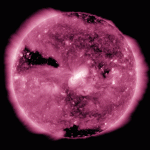
NASA’s Solar Dynamics Observatory spacecraft captured gorgeous views of a total solar eclipse on Sunday (Feb. 11), making the mission’s birthday even more special.
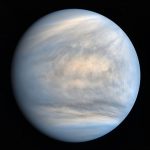
Despite no go-ahead for missions, scientists are still trying to get to Earth’s evil twin

Happy Valentine’s Day… from space!
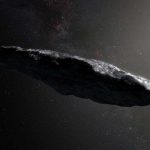
The first discovered interstellar visitor to our solar system has had a violent past, which is causing it to tumble around chaotically, a Queen’s University Belfast scientist has discovered.

2018 CC and 2018 CB — two small asteroids recently discovered by NASA-funded astronomers — safely flew past our planet this week.

The “rogue” worlds are said to be located 3.8 billion light-years away.