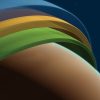
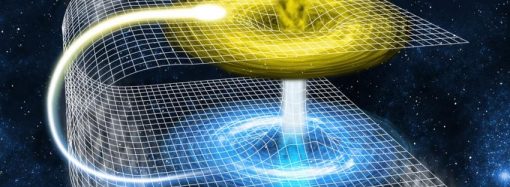
Gravity doesn’t leak into large, hidden dimensions0
- From Around the Web, Space
- February 2, 2018
Observations from neutron star smashup challenge some theories that include unknown realms

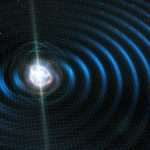
Observations from neutron star smashup challenge some theories that include unknown realms
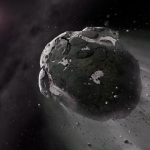
An intermediate-sized asteroid discovered sixteen years ago will fly safely past Earth on February 4, 2018 at 4:30 p.m. EST (1:30 p.m. PST, 21:30 UTC).
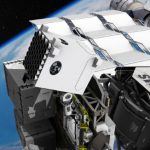
NASA engineers have successfully demonstrated X-ray navigation in space — a capability that could revolutionize NASA’s ability in the future to pilot robotic spacecraft to the far reaches of our Solar System and beyond.
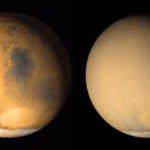
Martian dust storms play a role in the ongoing process of gas escaping from the top of the planet’s atmosphere, according to a new study using observations by NASA’s Mars Reconnaissance Orbiter (MRO).
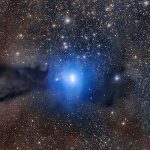
A dark cloud of cosmic dust snakes across this spectacular wide field image, illuminated by the brilliant light of new stars.

Astronomers using data from the NASA Kepler spacecraft’s reborn K2 mission have found a triple system of super-Earth exoplanets around a cool star called LP 415-17.

While the Patriots battle the Eagles in Minneapolis during Super Bowl 52 (February 4th, 2018, starting at 6:30 p.m. ET on NBC) a quite large asteroid with the official name of ‘2002 AJ129’ is set to whiz by Earth, missing us by a scant 2.6 million miles.
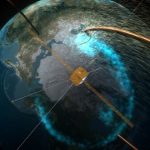
Using an antenna at the Goddard Space Flight Center, NASA engineers have picked up signals from IMAGE, an important space weather satellite which has been lost since 2005.
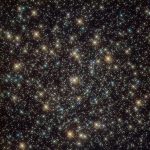
This image from the NASA/ESA Hubble Space Telescope reveals a glistening and ancient globular cluster named NGC 3201 — a gathering of hundreds of thousands of stars bound together by gravity.

Although we have no definitive evidence, even the most skeptical of scientists have to admit that it is a statistical probability, that life, in one form or another, will exist somewhere else in the Universe.