Jupiter’s Stormy North0
- From Around the Web, Space
- January 27, 2018
See Jupiter’s northern polar belt region in this new view taken by NASA’s Juno spacecraft.

See Jupiter’s northern polar belt region in this new view taken by NASA’s Juno spacecraft.
NASA’s Global-scale Observations of the Limb and Disk, or GOLD mission launched at 5:20 p.m. EST, Thursday, Jan. 25, as a commercially hosted payload on the SES-14 satellite.
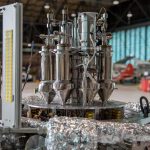
Initial tests in Nevada on a compact nuclear power system designed to sustain a long-duration NASA human mission on the inhospitable surface of Mars have been successful and a full-power run is scheduled for March, officials said on Thursday.

MARS has been called the Planet of War.
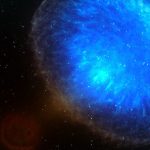
Puzzled scientists expected the brightness to fade quickly

How an international team of researchers is constraining the speed of invisible and undetectable dark matter
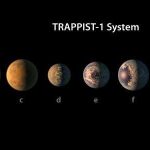
Two exoplanets in the TRAPPIST-1 system have been identified as most likely to be habitable, a paper by PSI Senior Scientist Amy Barr says.
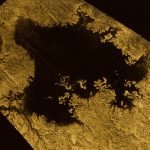
Saturn’s moon Titan may be nearly a billion miles away from Earth, but a recently published paper based on data from NASA’s Cassini spacecraft reveals a new way this distant world and our own are eerily similar.

Friday, January 19, 2018, 5:42 PM – Did you see the incredible meteor fireball that flashed across the sky over Windsor-Essex and southern Michigan on Tuesday night? Astronomers from Flint’s Longway Planetarium have actually found fragments meteorites from this bright bolide explosion!
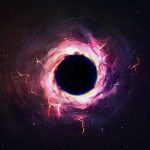
Chris Packham, associate professor of physics and astronomy at The University of Texas at San Antonio (UTSA), has collaborated on a new study that expands the scientific community’s understanding of black holes in our galaxy and the magnetic fields that surround them.