There’s a compelling reason scientists think we’ve never found aliens, and it suggests humans are already going extinct0
- From Around the Web, Space
- July 21, 2017
Unchecked climate change would eventually lead to widespread devastation on Earth.


Unchecked climate change would eventually lead to widespread devastation on Earth.
NASA’s Van Allen Probes have observed a new population of space sound waves, called plasmaspheric hiss, which are important in removing high-energy particles from around Earth that can damage satellites.
Searching for aliens is a tricky business. Most likely, the first alien life we discover will be hidden beneath miles of ocean on a distant world like Jupiter’s moon Europa or Saturn’s moon Enceladus.

Scientists have long held the belief that planets — including Earth — were built from rocky asteroids, but new research challenges that view.

A new study of a nearby cluster of newly formed stars reveals that brown dwarfs may rival stars in the Milky Way in number, with one brown dwarf for every two bona fide stars.
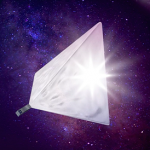
Russia’s first crowd-funded satellite, named Mayak (Russian for “beacon of light”), promises to be the “brightest object in the night sky next to the Moon.”

Astronomers say they’ve detected “strange signals” coming from the direction of a small, dim star located about 11 light-years from Earth.

Sealed behind the steel doors of two bunkers in a Beijing suburb, university students are trying to find out how it feels to live in a space station on another planet, recycling everything from plant cuttings to urine.

While fighting climate change and providing health care are both just too economically burdensome for America, members of the House believe there’s still enough cash to fund a space army that would fight off… the space enemies.
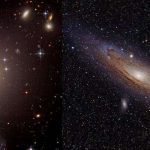
Spiral galaxies are found to be strongly rotating, with an angular momentum higher by a factor of about 5 than ellipticals. In a new study, the researchers have traced back the dichotomy in the angular momentum of spiral and elliptical galaxies to their different formation history. In particular, the low angular momentum of ellipticals is mainly originated by nature in the central regions during the early galaxy formation process.