Curiosity rover finds its crater was habitable for 700 million years0
- From Around the Web, Space
- June 10, 2017
And there are indications that groundwater persisted for far longer.

And there are indications that groundwater persisted for far longer.
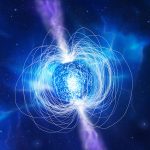
Talk about rocking the cradle. Sharp new images have identified a throng of newborn stars as the source of a fast radio burst. The discovery strengthens the idea that these brief pulses of radio waves arise from newly formed neutron stars, super-dense objects just 20 kilometres across.
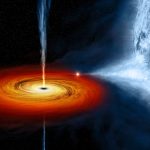
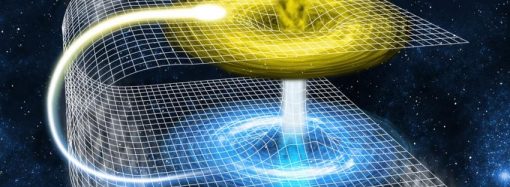
Some have cast doubt about the existence of black hole event horizons from which nothing, not even light, can escape the gravitational pull.
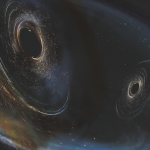
Three billion years ago, in a third of a second, two black holes crashed into each other and merged into a single entity, converting two solar masses into energy that shook the fabric of spacetime, sending gravitational ripples across the universe that were detected on Earth last January, researchers announced Thursday.
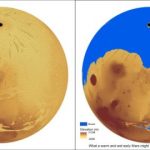
Findings suggest Red Planet had ocean, active hydrologic cycle
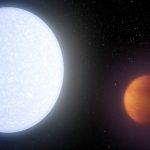
This gas giant gives “hot Jupiter” a whole new meaning.
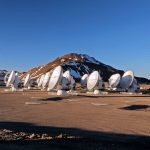
The Atacama Large Millimeter/submillimeter Array has discovered a new object very near Alpha Centauri in the sky.
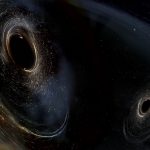
Three’s a party. The LIGO collaboration has made its third observation of gravitational waves emanating from a pair of merging black holes – giving us more insight into how these pairs form and building up our catalogue of them.

Fifty times the size of Jupiter.
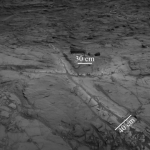
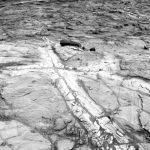
Lighter-toned bedrock that surrounds fractures and comprises high concentrations of silica—called “halos”—has been found in Gale crater on Mars, indicating that the planet had liquid water much longer than previously believed.