How to Make Tools on Mars, Using Dust0
- From Around the Web, Space
- May 2, 2017
You can’t carry everything you need from Earth, so researchers made 3-D–printed shapes with mocked-up Mars dust

You can’t carry everything you need from Earth, so researchers made 3-D–printed shapes with mocked-up Mars dust
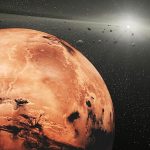
Mars has an asteroid entourage, with nine so-called Trojans trailing in its wake. Now it seems these travelling companions all had the same violent beginning: as the innards of a mini-planet, eviscerated in a violent collision. Some remnants may even have been incorporated into the material that became Mars.
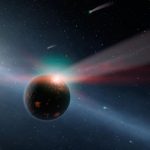
A new study from the University of Edinburgh has linked comet activity to a period of cooling in Earth’s past.
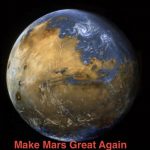
A research team has devised a plan to make a portion of Mars more Earth-like by slamming an asteroid into it.
Life begins with a bang.
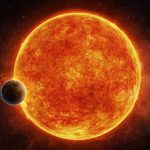
The potentially habitable world is close enough that existing telescopes could look for an atmosphere and sniff for traces of extraterrestrials.
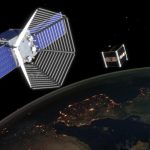
The growing popularity of small satellites as well as the upcoming deployment of low-Earth orbit mega-constellations will likely greatly increase the amount of space junk as well as the frequency of catastrophic collisions, a study led by the United Kingdom’s University of Southampton suggests.

Life on an alien planet with two suns in its sky, like Luke Skywalker’s home world Tatooine in the “Star Wars” films, may indeed be possible, a new study suggests.
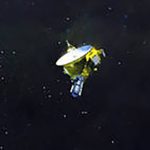
Images taken by NASA’s New Horizons mission on its way to Pluto, and now the Kuiper Belt, have given scientists an unexpected tool for measuring the brightness of all the galaxies in the universe, said a Rochester Institute of Technology researcher in a paper published this week in Nature Communications.
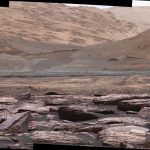
The Red Planet lacks a source of carbon dioxide that could transform its thin, cold atmosphere into something resembling conditions on Earth.