Star Vanishes: Stellar Disappearance Could Be Evidence Of Aliens, Say Scientists0
- From Around the Web, Space
- July 15, 2016
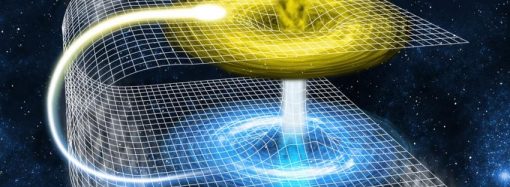
Could the sudden disappearance of stars prove of an alien civilization?


Could the sudden disappearance of stars prove of an alien civilization?
After an extensive review process and passing a major development milestone, NASA is ready to proceed with final design and construction of its next Mars rover, currently targeted to launch in summer of 2020 and arrive on the Red Planet in February 2021.

Astronomers have recently discovered unusual source of intense radiation that is likely powered by a “direct-collapse black hole,” a type of object predicted by theorists more than a decade ago.
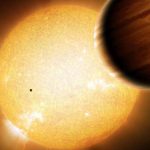
After analyzing four years of Kepler space telescope observations, astronomers from the University of Toronto have given us our clearest understanding yet of a class of exoplanets called “Warm Jupiters”, showing that many have unexpected planetary companions.
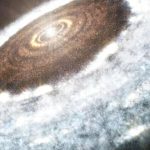
A violent outburst by the young star V883 Orionis has given astronomers their first view of a water “snowline” in a protoplanetary disk – the transition point around the star where the temperature and pressure are low enough for water ice to form.
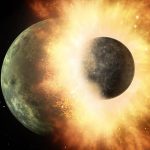
Like a boisterous older sibling, the gas giant both beat up and protected young Earth
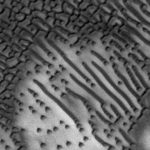
NASA has spotted a series of strange, dark dunes on Mars that look uncannily like the dots and dashes that make up Morse code.
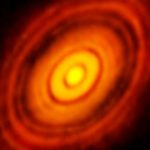
Astrophysicists researching the protoplanetary disc surrounding the young star HL Tauri discover revealing substructures within the disc that have never been seen before.
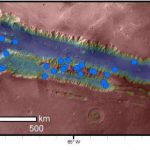
Puzzles persist about possible water at seasonally dark streaks on Martian slopes, according to a new study of thousands of such features in the Red Planet’s largest canyon system.
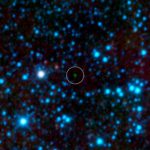
Astronomers are revealing that they have found strong evidence of water clouds detected on a body outside of the solar system during the same week NASA celebrated the entry of their JUNO spacecraft into Jupiter’s orbit.