Rare Giant Squid Caught on Camera in U.S. Waters for the First Time0
- Earth Mysteries, From Around the Web
- June 26, 2019
Scientists at NOAA captured a video of the rare, deep-sea giant squid off the coast of New Orleans

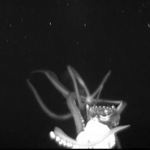
Scientists at NOAA captured a video of the rare, deep-sea giant squid off the coast of New Orleans

The fly hasn’t eaten for an entire day and it’s starving. Finally, it finds a pile of edible gelatinous goo. It begins eating when suddenly a green light appears, and the food, which was far from delicious a moment ago, becomes irresistibly sweet. The fly, excited by the sudden improvement, eats with increased vigor. But its enthusiasm quickly wanes when the green light disappears and the flavour of the food reverts to its original blandness.

Hidden and secretive government agencies have long captured the public’s imagination.

Exactly what will happen when our planet sweeps through the Taurid Complex is unknown, but astronomers are preparing to observe the contents of the cosmic debris

“As a UFO researcher and journalist, folks frequently ask me about when people observe UFOs. I usually smile and reply, “That’s not an easy answer.”” ~Cheryl Costa

Americans prefer a space program that focuses on potential asteroid impacts, scientific research and using robots to explore the cosmos over sending humans back to the moon or on to Mars, a poll shows.

In the Bible’s Book of Ezekiel, a mysterious ship appears from the sky in Chaldea, modern-day Kuwait. The next wave of mysterious apparitions showed up in fourth-century China when a “moon boat” was documented floating over the country once every 12 years. More strange sightings were noted around Rome in 218 B.C., Germany in 1561, Hull, England, in 1801, and multiple times during World War II when allied pilots used the term “foo fighters” to describe the odd circles of light pilots noticed flanking their planes during combat.
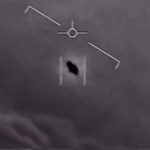
For centuries, people have witnessed unexplained lights in the sky and thought that perhaps they might be ghosts or angels.

A new flyby mission selected by the European Space Agency this week for launch in 2028 will be the first to intercept a new comet or interstellar object fresh from the frozen depths of the outer solar system, or beyond.
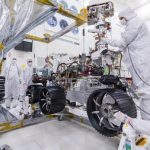
Engineers prepare the starboard legs and wheels for integration onto NASA’s Mars 2020 rover