Kepler Captures Details of Unusual Stellar Explosion: FELT Supernova0
- From Around the Web, Space
- March 28, 2018
NASA’s Kepler Space Telescope has caught a kind of stellar explosion called a Fast-Evolving Luminous Transient (FELT) in the act.


NASA’s Kepler Space Telescope has caught a kind of stellar explosion called a Fast-Evolving Luminous Transient (FELT) in the act.

What if the odds of an event occurring were about one in ten billion? This is the case for the decay of a positively charged particle known as a kaon into another positively charged particle called a pion and a neutrino–antineutrino pair.

A camera onboard the OSIRIS-REx spacecraft captured this image of the Pacific Ocean, Baja California in Mexico, and parts of the southwestern United States. The dark lines are missing data caused by short exposure times

China’s Tiangong-1 space station is about to return to Earth–as a massive fireball.

The NASA/ESA Hubble Space Telescope has taken a picture of the spiral galaxy NGC 5714.

Michigan State University scientists are testing a promising drug that may stop a gene associated with obesity from triggering breast and lung cancer, as well as prevent these cancers from growing.
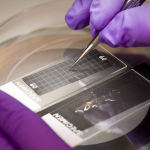
When plants on Earth search for nutrients and water, what drives their direction? Very simply, gravitational force helps them find the easiest path to the substances they need to grow and thrive. What happens if gravity is no longer part of the equation?

To the Stars Academy (TTSA) posted a third Department of Defense (DoD) UFO video in coordination with the posting of an opinion piece by TTSA member Chris Mellon in The Washington Post. Mellon is a former deputy assistant secretary of defense for intelligence. He served during the Clinton and George W. Bush administrations. Mellon is a current the national security affairs advisor for TTSA.

Asteroid Bennu, a space rock the size of the Empire State Building, is expected to fly by close to Earth in 2135.
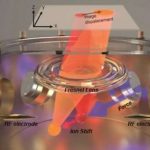
Researchers at Griffith University working with Australia’s Commonwealth Scientific and Industrial Research Organisation (CSIRO) have unveiled a stunningly accurate technique for scientific measurements which uses a single atom as the sensor, with sensitivity down to 100 zeptoNewtons.