Quantum spin liquid could shed new light on superconductivity0
- From Around the Web, Science & Technology
- March 24, 2018
A new type of quantum spin liquid has been unveiled by an international team of physicists and chemists.

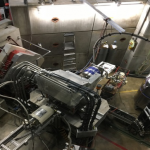
A new type of quantum spin liquid has been unveiled by an international team of physicists and chemists.

The “crazy teenager” is one of the oldest social tropes around. But adolescents aren’t really crazy at all—in fact, they’re usually acting pretty rationally considering the biological earthquake raging inside their heads, prominent neuroscientist Dr. Frances Jensen explained during the 3rd annual Fortune Brainstorm Health conference in Laguna Niguel, CA.
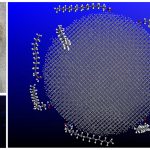
With an enthusiasm for chemistry that’s hard to miss, and scientific achievements that defy her age, Cholaphan Deeleepojananan, a senior in chemistry at Missouri University of Science and Technology, chose her path while in high school in Nakhon Pathom, Thailand.
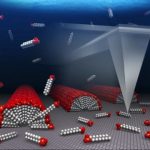
A fluke discovery could pave the way towards improved graphene-based electronics

Less than two weeks before his death on March 14, beloved cosmologist Stephen Hawking put the final touches on a research paper about the origin and nature of the Universe. Some media outlets have been pouring praise onto the paper, saying it could be the most important thing he ever did. On closer inspection, however, the new study isn’t likely to shatter our conceptions of the cosmos—at least not yet.
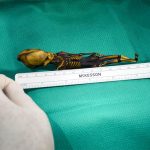
Ending a long-standing mystery that once set the unidentified flying object community abuzz, researchers have sequenced the entire genome of a strange, 15-centimeter-tall human skeleton and identified mutations that may be responsible for its odd appearance.

The craft might not be alien, but could suggest that China, Russia or some other country has secretly developed incredibly advanced technology

Peruvian scientists have finally unravelled the mystery behind the fireballs that lit up the night sky as they fell to Earth last month.
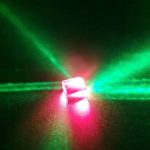
The maser (microwave amplification by stimulated emission of radiation), the older microwave frequency sibling of the laser, was invented in 1954. However unlike lasers, which have become widespread, masers are much less widely used because in order to function they must be cooled to temperatures close to absolute zero (-273°C).

Russian researchers have analyzed tissue samples from one of the mysterious alien creatures uncovered in Peru last year. The mummy, with an elongated skull and only three fingers, has excited ufologists since its discovery.